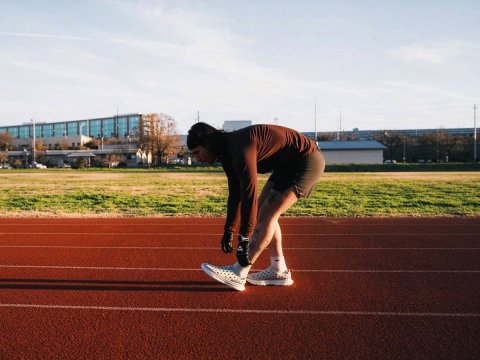
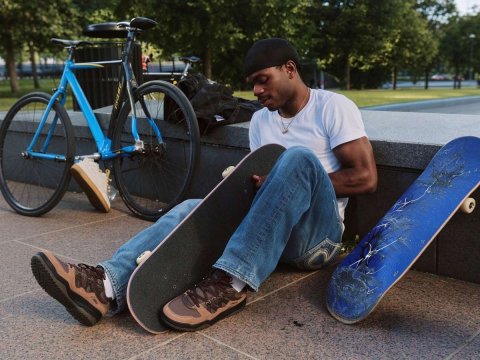
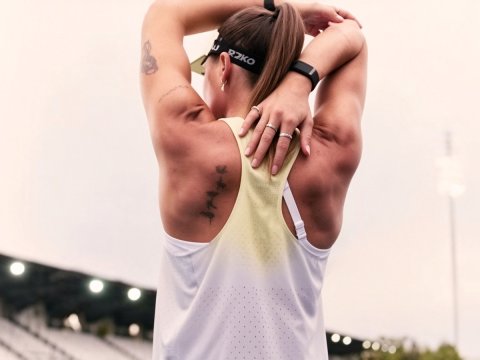
He looked like the biggest tool alive, so he fixed running sunglasses
Official homepage: https://goodr.com
Every running brand claims it was born from a problem its founders personally suffered. Goodr's origin is more specific — and more embarrassing — than most. One morning in the early 2010s, Los Angeles marketing director and obsessive runner Stephen Lease looked in the mirror before a training run and did not like what he saw: a Nike compression hat, lame sunglasses, a gel-stuffed run belt, the full over-engineered uniform of the earnest amateur. He called his running buddy and announced he had hit rock bottom. But the self-mockery carried a market observation he had been nursing at his run club — eighty percent of the runners around him were not wearing performance eyewear at all, because the performance options were overpriced, over-engineered, and, in his word, tools. A decade later, that mirror moment has produced a company with more than five thousand retail doors, a hundred and forty employees, a flamingo for a CEO, and one of the best consumer propositions in running retail. This review measures the operation across eight dimensions — from the six failed companies before it to the fine print that stops at the water's edge.
The mirror moment that started a sunglasses brand
The insight became a design brief with five requirements — look good, be affordable, not slip when sweaty, not bounce on the run, protect the eyes — and a philosophy the founders formalized as the Four Fs: Fun, Fashionable, Functional, and Ffordable. The founding team came from a high school yearbook: Lease, Ben Abell — a corporate lawyer he describes as a recovering attorney — and Keri Blunt, a biology major turned actress, all friends from Denver. On March 15, 2015, they launched via Kickstarter, shipping the first pairs from an apartment. None had manufacturing experience, so they emailed more than one hundred sunglass manufacturers through Alibaba, worked through the thirty who replied and the ten who spoke workable English, sampled three, and chose one — self-funding an initial run of six colors and 1,800 units, the supplier's minimum, then reinvesting through repeated sellouts.
Six failed companies before the seventh worked
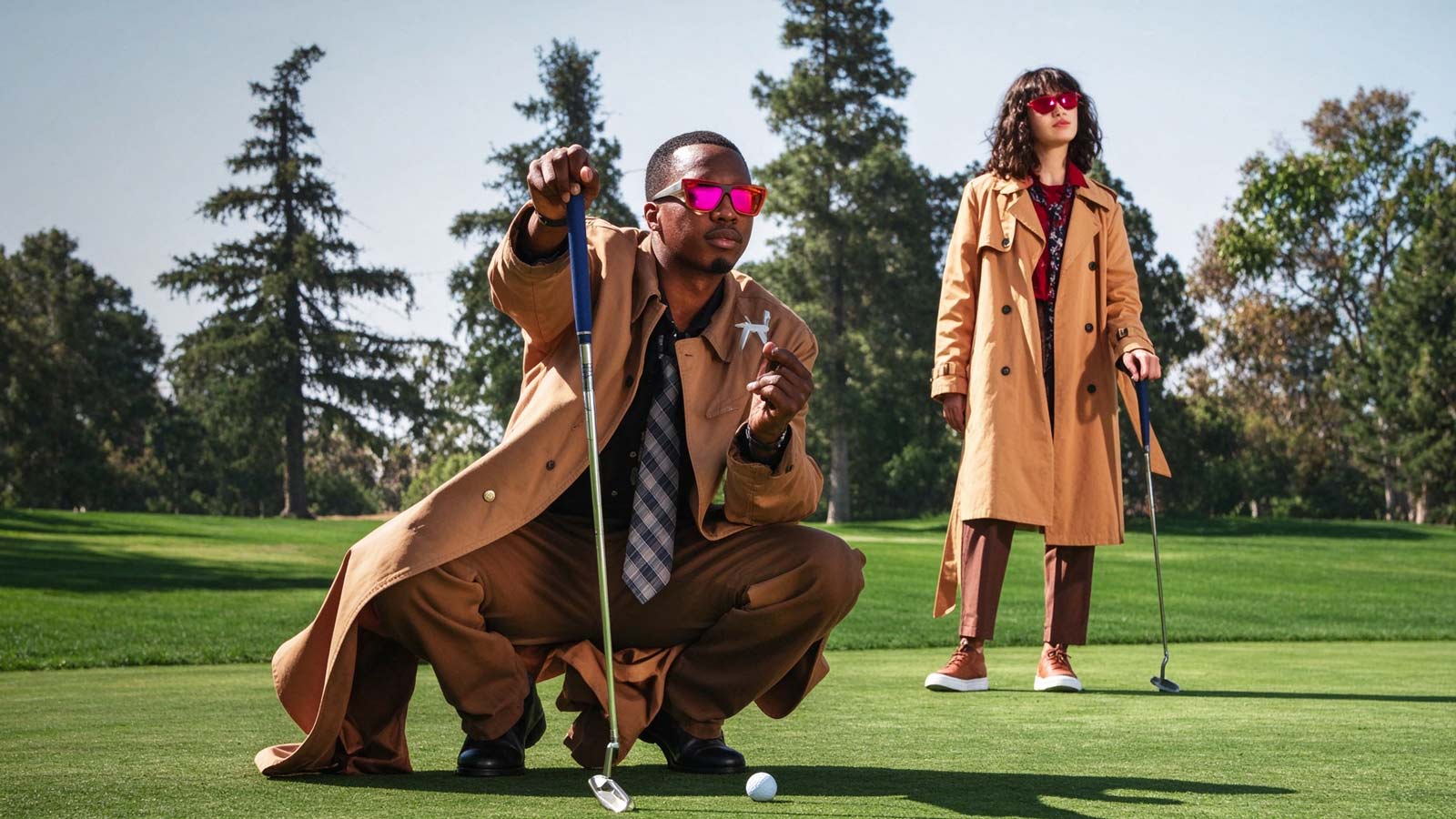
The funding arc matters because it explains everything about the company's discipline. Lease's sixth company was funded entirely by product cycles and early Amazon sales of thirty to forty pairs a day — no venture capital, no debt, no runway anxiety. The first two years ran on reinvestment alone, which is why the $25 price ceiling has never moved: the founders learned the economics of their own supply chain before anyone taught them. That bootstrap texture still shows in a catalogue that expands by frame shape — aviator Mach Gs, round Circle Gs, angular Pop Gs, wraparound Wrap Gs, futuristic monolens VRGs, golf-oriented BFGs, blue-light gaming shades, and swim goggles — each new silhouette launched with the same cocktail of specs and silliness.
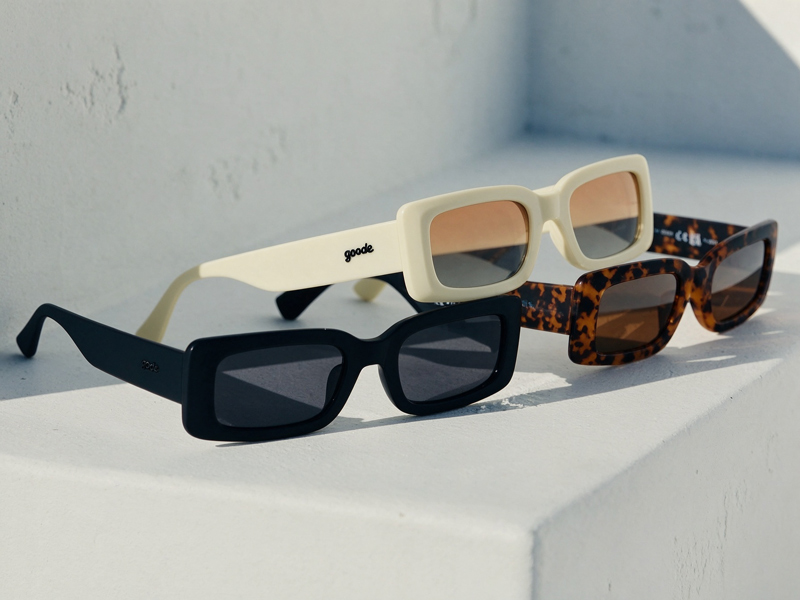
A hundred Alibaba emails and eighteen hundred units
The product discipline is printed on every pair: No Slip, No Bounce, All Polarized, All Fun. The no-slip promise comes from a special grip coating on the frames; the no-bounce from a snug, lightweight fit; the polarized lenses carry UV400 protection; and the fun is the part competitors cannot copy — frames in dozens of colorways with names like Flamingos on a Booze Cruise, Amelia Earhart Ghosted Me, and Mind the Wage Gap. The price has stayed pinned at $25 for the flagship Originals since launch, turning sunglasses from an investment into an impulse. Award juries responded: Runner's World Gear of the Year twice, Bicycling Gear of the Year, Men's Health Best Buy, GQ's best sunglasses of the year, Rolling Stone's favorite for athletes.
No slip, no bounce, all polarized, all fun
The Four Fs operate as both product spec and brand contract. The frames use a special grip coating to stay put against sweat, the snug fit eliminates bounce, the polarized UV400 lenses handle protection, and the naming system handles the rest — every colorway a joke, every joke a shareable object. The result is a product that performs credibly at three times the price while refusing to take itself seriously, which turned out to be precisely the gap in a category dominated by $150 sport eyewear sold with mountaineering photography.
Gear of the year, and the doors multiplied
Retail came to them, which is the part founders usually get backwards. After the November 2016 Runner's World award, specialty running shops started calling, and by late 2016 the brand had its first wholesale accounts. A trade-show booth at The Running Event staffed with inflatable palm trees, inflatable flamingos, and beach chairs announced the methodology: sell the party, ship the product. By 2019, Goodr had sold more than a million pairs; by 2020 it counted 1,400 retail accounts across fifty countries; by 2024 the network passed 5,000 doors worldwide, plus a Los Angeles flagship called the Cabana and national placements at REI, Fleet Feet, and Public Lands.
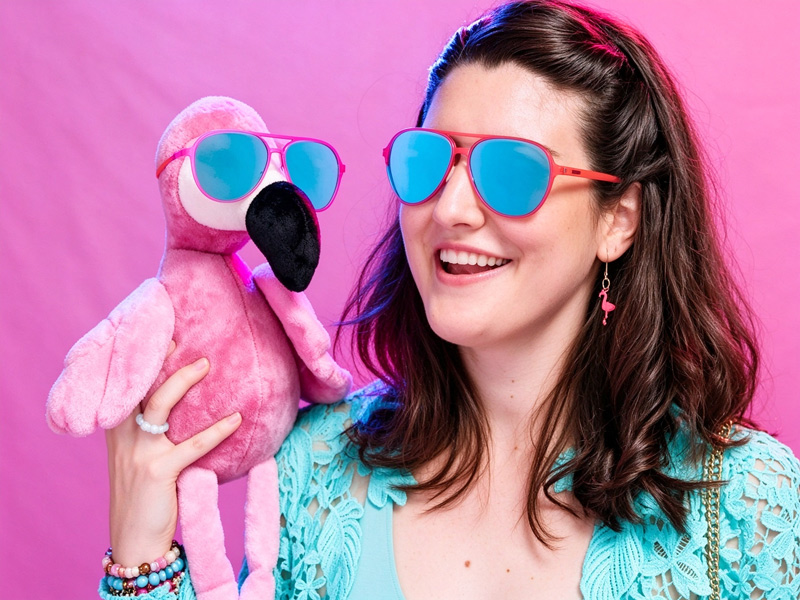
Cabanas, five thousand doors, and an avian CEO
The company, headquartered in Inglewood, employs more than 140 people it calls Flamingos, and its public face is an avian mascot: Carl the Flamingo, the piña-colada-soaked bird invented in the origin story for the first frame, who holds the title of CEO while Lease makes do with Chief Executive Octopus. Carl fronts race partnerships — including official sunglasses of the Obstacle Course Racing World Championships — and the company's culture podcast, which has hosted Daniel Pink, Seth Godin, and Kim Scott. Inc. Magazine put the company on its Best Places to Work list, the one award in the trophy case with nothing to do with sunglasses. The culture is not decoration; it is the retention engine and the marketing moat in one.
Thirty day free returns and a one year warranty
The shopping terms carry the same voice as the marketing, which makes the substance easy to miss — so here it is plainly. Goodr offers a 30-day return and exchange period, and unlike most brands at this price, the returns are free, processed through a self-serve portal; items must come back unworn and undamaged, with exceptions for bear attacks evaluated case by case. Every pair carries a one-year warranty from the original purchase date. Shipping is 100 percent carbon neutral, and the site layers a rewards program, a Flamboyance Ambassador community, and verified-community discounts through ExpertVoice for military, first responders, and the like. The caveats sit at the border: returns must originate from the original point of sale, final-sale items are excluded, and — the clause international fans should read twice — Goodr does not accept returns or exchanges on any Canadian, APO, FPO, DPO, or non-US orders. All international sales are final.
Who should wear a flamingo on their face
Goodr in 2026 is for a specific buyer: the runner who wants performance eyewear that costs less than a race entry, the trail runner who loses sunglasses at the rate the pricing assumes, the cyclist and golfer already wearing the brand into adjacent sports, the gift-giver who wants a guaranteed smile at twenty-five dollars, and the culture-watcher who buys into a company whose values are written on its sleeve and on its podcast. For that buyer, Goodr has quietly built one of the best consumer propositions in running retail: an award-winning product at a price that removes deliberation, free 30-day returns, a one-year warranty, carbon-neutral shipping, and a brand personality no incumbent has imitated at any price. It is less suited to the international shopper — for whom every sale is final — or the traditionalist who wants eyewear sold with sobriety. But the mirror that embarrassed one runner in Los Angeles now reflects a company with five thousand doors, a hundred and forty Flamingos, and a flamingo in the corner office. The tool fixed the category, and he never had to look like one again.