From a hoboken extra bedroom to tim cook's closet: the untuckit story
Official homepage: https://untuckit.com
In 2010, a healthcare salesman on a Las Vegas trip realized he had worn the same shirt three days running — not because it was his favorite, but because it was the only one that looked right untucked. He surveyed five hundred men, prototyped for a year, and in 2011 launched a company from a Hoboken extra bedroom with $150,000 from friends and family: ten shirts, a divisive name, and a spec sheet obsession the shirt industry had never bothered with. Fifteen years later the brand dresses Tim Cook and Warren Buffett, has sold millions of shirts, and in September 2026 sold to a century-old accessories giant with a half-billion-dollar ambition. This review examines the storefront dimension by dimension.
An extra bedroom, two day jobs, and $150,000
The founding logistics are the anti-glamour that reviewers should love. Chris Riccobono — a healthcare salesman with a finance degree from Providence College and an MBA from Columbia — and Aaron Sanandres, a seventeen-year PricewaterhouseCoopers veteran from the same business school class, kept their day jobs and worked nights out of the third bedroom of Riccobono's Hoboken apartment. The friends-and-family round raised $150,000, which is, as Riccobono has noted, not a lot of money to launch a fashion brand. The first month moved a hundred and fifty units, mostly to people who already knew them; Riccobono ironed and processed every return by hand and the two founders answered every email and phone call themselves.
The ten-year anniversary journal the company published preserves the texture: radio spots and airline-magazine ads as the early media mix — this was 2013, before influencer marketing had a name — and the first brand ambassador, two-time Stanley Cup champion Brad Richards of the New York Rangers. By the end of that year, the company had sold out of untucked shirts entirely.
Las Vegas, three days, and one shirt
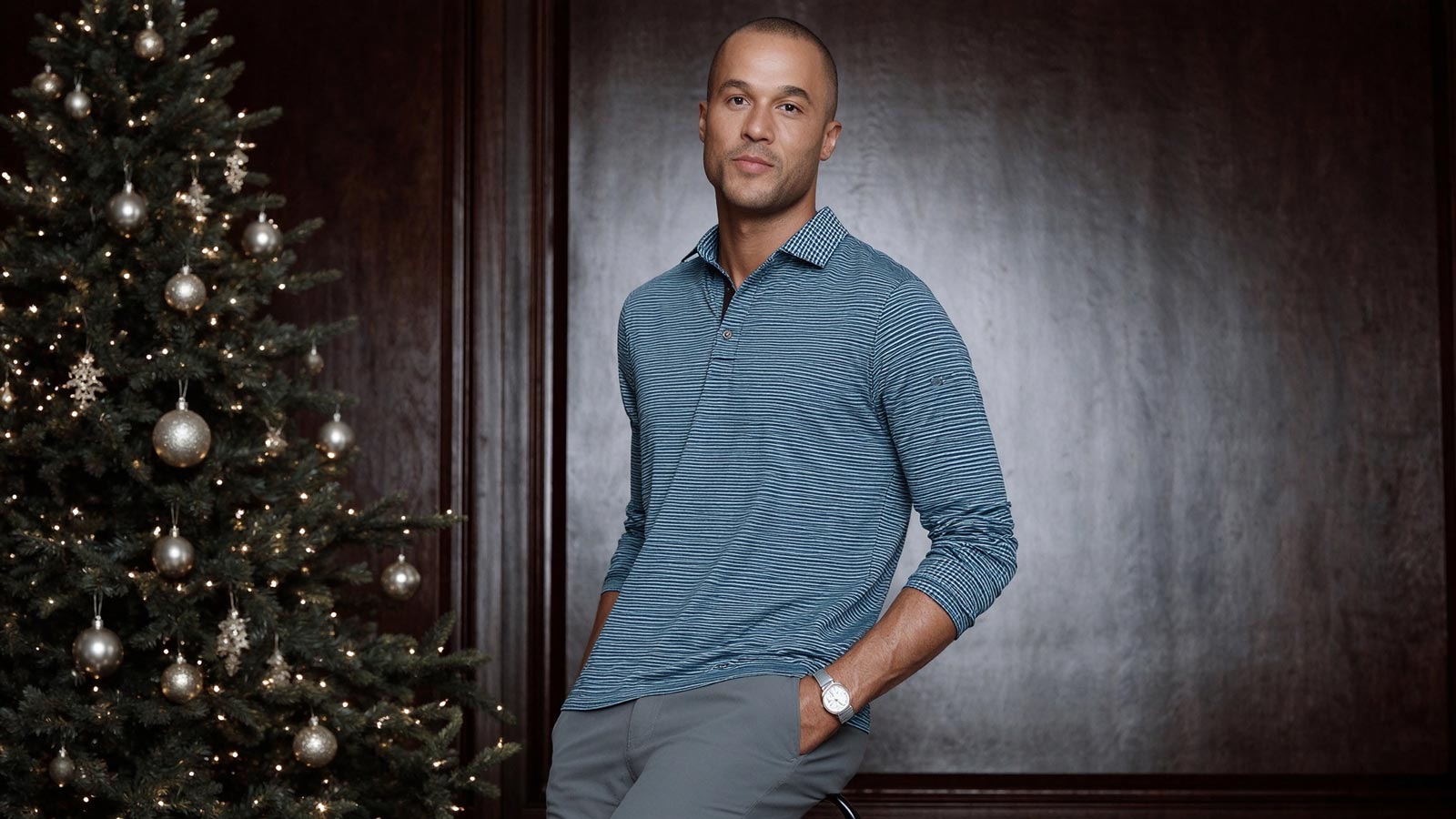
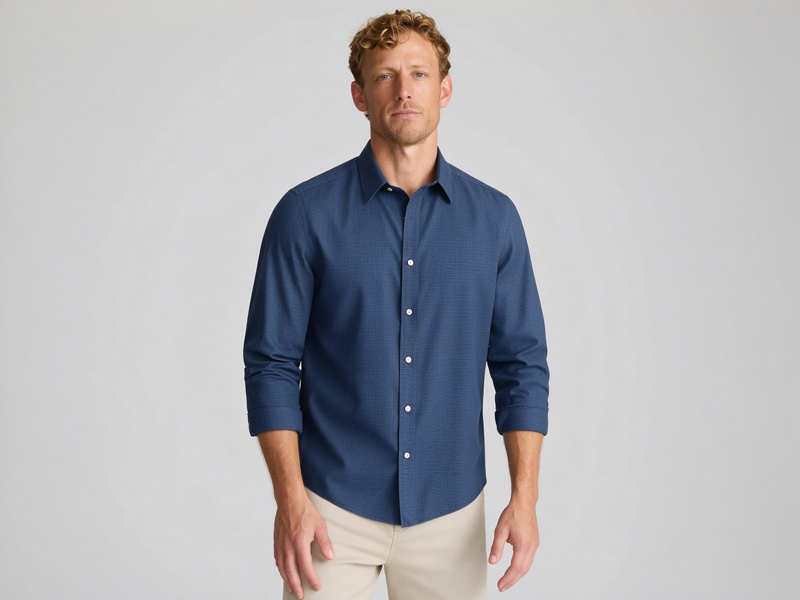
The origin problem is told with consistent details across a decade of interviews. On a 2010 trip to Las Vegas, Riccobono noticed he had packed and worn the same shirt three days in a row — the one shirt that looked acceptable untucked — and when he got home he asked roughly five hundred men about their shirts. The complaint was universal: regular shirts were too long untucked, and nobody had engineered the alternative. A year of prototyping produced the specification the company still advertises: a hem falling midway between the belt and the bottom of the zipper — mid-fly, in the founders' joking shorthand — with a contoured, even hemline so the shirt tail does not flare like a blouse. Sanandres has called it the world's largest study ever undertaken on untucked shirts.
The name fight belongs in the same paragraph. Fashion insiders told Riccobono the name was terrible, that it was not fashionable or refined, and investors — older, wealthy men being pitched a shorter shirt — laughed at the concept. Riccobono's retrospective verdict is the branding lesson of the company: the name is the smartest thing we ever did — divisive, disruptive, and it got people talking. The product explained itself to anyone who read it.
Spec obsession as brand: measuring the incumbents
The quality story is the part most apparel reviews skip, and it is Untuckit's most distinguishing asset. Early shirts failed — Riccobono has admitted he did not know cotton had to be pre-washed to take out shrinkage, or that buttons had to be engineered a certain way — and when factories told him an inch and a half of length variance was just how cotton behaved, he refused the answer. His response was a measuring spree: he ordered twenty J.Crew shirts and twenty Brooks Brothers shirts, measured identical sizes across each brand, and found enormous variance — because, in his telling, the shirts were cut so generously that nobody noticed and nobody cared. Untuckit built its manufacturing specs to eliminate that variance: the same fit, shirt to shirt, across the entire catalog, verified by measurement rather than trust.
The tenth anniversary revisited the obsession with a luxury Italian capsule: Monti long-staple cotton, wrinkle-free finishing, single-needle side seams, a double-reinforced stay-put collar — at $129, marketed entirely on construction details rather than lifestyle photography.
Radio spots, airline magazines, and a Ranger
The marketing chronology is a museum of pre-algorithm growth. Radio spots and airline-magazine ads seeded national awareness among exactly the traveling-businessman demographic the product served; a hockey ambassador added credibility with a group that does not read fashion media; and word of mouth — the try-on moment in the stores, where wives reportedly redirected their husbands to the fitting room — did the conversion. The company was profitable from its second year and doubled sales annually through the 2010s, attracting a $30 million Kleiner Perkins round in 2017 at a valuation north of $200 million, with Wayne Gretzky joining as investor and ambassador the following year.
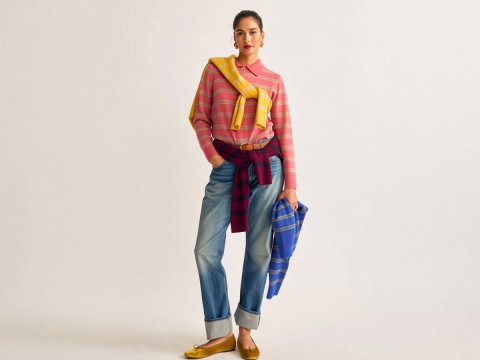
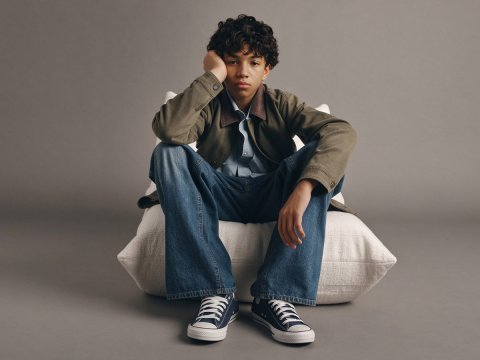
The expansion logic followed the product's own logic: men wrote in that their polos, T-shirts, and sweaters were too long and inconsistent too, and the company extended the spec discipline outward — first into adjacent categories, then into a women's line in 2017 and children's that fall, until the site sold what the anniversary copy calls the entire wardrobe in one place.
From ninety stores to the Randa acquisition
The store arc deserves its own paragraph because it is honest and unusual. Untuckit opened its first store in SoHo in 2015, hit ninety locations across the United States, Canada, and the United Kingdom by 2019 — among the fastest retail expansions on record — and later settled lower, operating roughly seventy to eighty-eight stores depending on the year and source, with the flagship storefront remaining the website. The pandemic tested the model: marketing budgets were cut hard out of cash caution, and the brand's loyalty and customer lifetime value held the line anyway — an accidental proof that the brand building was real. Wholesale followed through Macy's, Von Maur, and a big-and-tall collaboration with DXL.
Then came September 2026: Randa Apparel & Accessories — a 1910-founded accessories giant with more than forty brand licenses — acquired Untuckit, with both founders remaining and the company operating stand-alone from its SoHo headquarters. Reported sales ran $200 to $250 million, and the stated ambition is to build the brand past $500 million. The deal reads like the natural end of the independence era the founders always described as finite: they built the category, the category built the balance sheet, and the balance sheet bought the strategic parent.
When your brand name becomes the category
The strangest asset in the ledger is a legal-risk-turned-marketing-gift: genericide. Because Untuckit marketed the untucked shirt so single-mindedly, the brand name began functioning as the generic term — any untucked button-down, from any maker, gets called an untuckit by social media and entertainment coverage. Trademark lawyers would reach for aspirin; Riccobono reached for the upside: the copycats and the misattribution kept drawing attention to the original, and celebrities photographed in rivals' shirts still sent shoppers to the brand that owned the word.
For the storefront, the dynamic is the dream and the ceiling of a single-problem brand in one: category ownership so complete that the category and the company blur — a moat made of vocabulary.
The honest texture of a single problem
Three honest cautions complete the picture. First, the niche ceiling: a brand built on one fit problem must keep finding adjacent problems — polos, sweaters, sport coats, women's and kids' lines — or watch the core age with its customers; the Randa acquisition is partly an answer to that arithmetic. Second, price and fabric honesty: shirts sit at accessible-premium prices and the construction details justify much of it, but the brand's sustainability ledger is thinner than the supply-chain-audited apparel brands reviewed in this category — responsible-sourcing commitments without a certification wall. Third, acquisition transition risk: stand-alone assurances are standard in press releases, and the half-billion target will pressure the merchandising discipline that made the original shirts matter.
None of these are hidden; all three are printed somewhere in the founder's own interviews. The brand that built itself on measuring everything invites its reviewers to measure it back.
The verdict for the untucked-shirt loyalist
Untuckit's storefront is the single-problem brand perfected: one hem length engineered like avionics, a spec sheet published like scripture, a name the industry mocked that became the category's vocabulary, and a fifteen-year arc from a Hoboken bedroom to Warren Buffett's shoulders to a century-old parent company's growth plan. The cons are the cons of the model: the niche ceiling that pushed it into acquisition, the thin sustainability paperwork, and the ever-present question of whether the next generation untucks.
Buy here if you have ever stood in front of a mirror tucking, untucking, and re-tucking; if a shirt that ends at the right place solves a daily irritation no style advice ever fixed; if construction details like stay-put collars and single-needle seams are your love language; and if a brand that measures its rivals' variance and publishes its own specs matches your idea of honesty. Buy the wholesale rack if you need the fit today, or wait for the Italian capsule if you want the obsession at its most obsessive. For the man whose shirt has always been a compromise, this extra-bedroom storefront remains the category's most literal answer — and, after fifteen years, still the only one measuring.