From a 350-square-foot garage to a 150-year-old mill: buck mason
Official homepage: https://www.buckmason.com
Buck Mason's founding document is a T-shirt that took more than fifty tries. In 2013, neighbors Sasha Koehn and Erik Allen Ford set up shop in a 350-square-foot garage off Venice's Abbot Kinney Boulevard — Koehn building the website, Ford obsessing over the fifty-plus iterations of the brand's first white tee — with a goal that sounded like anti-fashion: make fewer, better clothes that outlast the season. Thirteen years later, the brand clears north of $100 million a year across fifty-plus stores, famously turned down Robert Herjavec on Shark Tank, and in 2023 bought a 150-year-old Pennsylvania knitting mill rather than let it die. This review examines the storefront dimension by dimension: the iteration obsession, the Herjavec rejection, the mill rescue, and the honest arithmetic of the made-in-America halo.
Fifty iterations of a single white T-shirt
GQ's profile of the brand opens with the origin myth and immediately places it in the pantheon: every great brand needs a great origin story — Levi Strauss peddled riveted trousers to gold prospectors; Phil Knight paid thirty-five dollars for the swoosh — and Buck Mason's begins with two neighbors obsessively tinkering with a T-shirt in a Venice garage, going through more than fifty iterations to get every detail exactly right. The garage itself — 350 square feet off Abbot Kinney — was the whole operation: Koehn built the website and ran the business machinery; Ford created the first collection of jeans and tees. They were not fashion outsiders by accident: the pair had grown frustrated with the complexity of modern menswear and chose a deliberately architectural approach — deconstructing the iconic pieces Americans had worn for generations and refining them into modern, elevated classics.
The design doctrine that emerged is printed on the brand's About page in a sentence that doubles as a mission: our aim is for our clothing to outlive us — not just in that it lasts a lifetime, but that it will stand the test of time. Quality, restraint, and integrity are the stated ethos; consistency in fit, fabric, and quality is the operational one; and the founders' humility clause — we will never be perfect, but greatness lies in the search to be so — is the rare corporate sentence that admits the gap it works to close.
The offer from Herjavec they turned down
Shark Tank's 2014 episode should have been the brand's springboard, and it was — just not in the usual direction. The founders appeared, made their pitch for American-made classics, and received an offer from Robert Herjavec. They turned it down — a decision the brand now cites as famous, and the retail press cites as instructive: the exposure flooded the young site with orders, and the independence kept the equity and the decision-making at home. The growth curve that followed vindicated the refusal: from the garage to roughly nine stores by the mid-2020s, thirty shortly after, and fifty-plus by 2026, with annual revenue cleared past $100 million, growth holding near fifty percent, and some half a million shirts sold a year.
The financing arithmetic behind that independence is as notable as the stores: third-party databases list total funding around $2.5 million — a rounding error in an era when venture-backed apparel brands burned nine figures chasing the same customer. Buck Mason built the $100 million on operations, not on capital.
The 150-year-old mill they refused to bury
The 2023 chapter is the story the brand's fans tell strangers. When Mohnton Knitting Mills — a 150-year-old sewing factory and cloth mill in Berks County, Pennsylvania — was closing, the founders saw what the company's public materials call an opportunity to rebuild. They bought the mill, reopened it as the Buck Mason Knitting Mills, rehired the fifteen workers who had lost their jobs when it closed, and grew the workforce to twenty-seven producing roughly thirty thousand T-shirts a month. ABC's David Muir visited for the network's Made in America series, and the segment's arithmetic is the brand's proudest: of the roughly 500,000 T-shirts Buck Mason sells in a year, about 300,000 are now made in the USA from American-made fabric.
The mill purchase is the made-in-America thesis made physical: rather than importing the halo, the company bought the machinery, the building, and the payroll — converting a heritage asset that fashion's offshoring era had written off into the vertical backbone of a modern basics brand.
Sixty percent American, and proud of the split
The honesty file begins with the split itself: roughly sixty percent of the product is made in the USA, and about forty percent is imported — a ratio the brand publishes rather than hides, on the logic Ford has stated in interviews: the goal is not to manufacture everything in America but to work with the best makers worldwide while holding the line on value and quality. The materials ledger runs through GOTS-certified organic cotton, responsible-down certification on the Eddie Bauer outerwear collaboration, and partnerships that borrow heritage credibility wholesale — the J. Press collaboration on traditional Americana being the 2025 example.
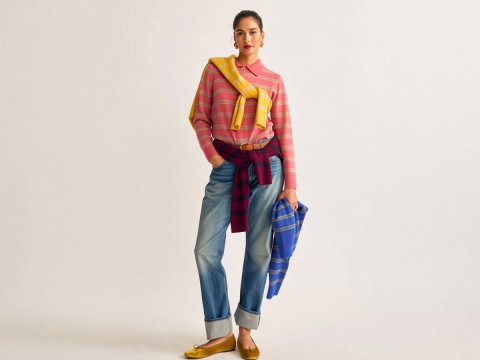
For the storefront reviewer, the sixty-forty disclosure is the trust anchor: a brand that publishes the exact percentage of its made-in-USA claim, and explains the sourcing logic in the founder's own words, is asking to be audited rather than admired. The womenswear expansion, led by a design executive recruited from contemporary labels and spotlighted in the New York flagship, extends the same classics doctrine to the other half of the wardrobe.
Stores built like your coolest friend's house
The retail concept predates the store count. The founders' original vision, documented in their commerce platform's case study, was that a Buck Mason store should be a comfortable hangout space — art on the walls, fine furniture, drinks, and music — rather than a generic clothing shop. Thirteen years on, that is what the fifty-plus locations deliver: the Abbot Kinney flagship in the old neighborhood, the Flatiron store in New York, and a national map where each store functions as brand theater for the California ethos of easy living, quality, and simplicity.
The return policy completes the service posture: 365 days from purchase, a full-year window that converts the quality claim into a contractual one and prices the brand's confidence in its own construction. For a basics brand, the store-plus-year-return combination is the conversion engine: touch the fabric in a room that feels like a friend's house, then live with the tee for a season before deciding.
A million masks in a pandemic pivot
The COVID chapter shows the supply chain's other capability. When the pandemic hit, Buck Mason pivoted its production network to manufacture and donate more than a million masks to essential workers — a logistics flex that repurposed the same factory relationships that make the tees, and a community gesture consistent with the neighbor-founders origin. The episode matters to this review less as philanthropy than as evidence: a brand with genuine manufacturing relationships can redirect them in weeks, which is the quietest and most convincing proof that the made-in-America and best-makers-worldwide claims are operational facts rather than marketing copy.
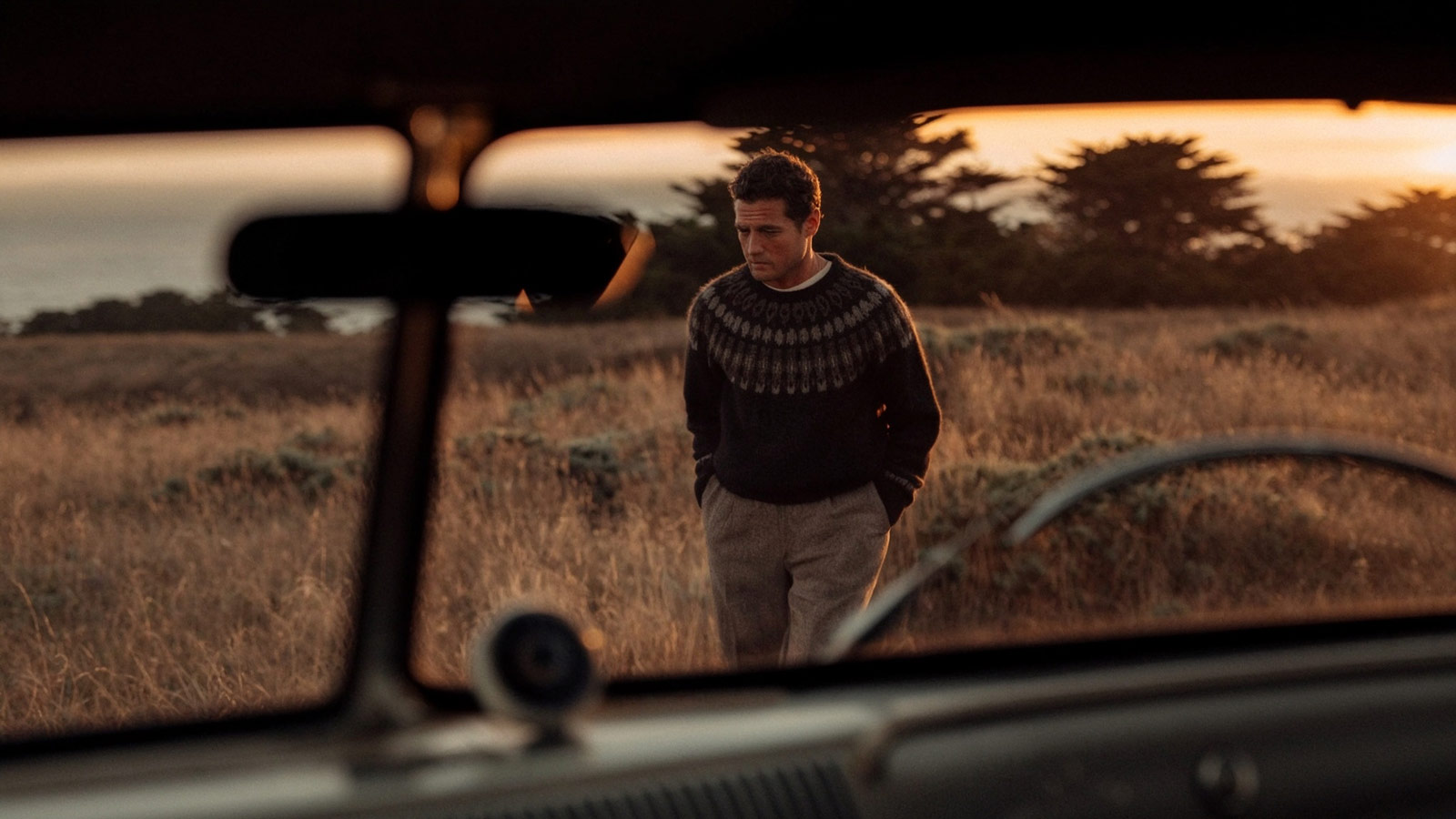
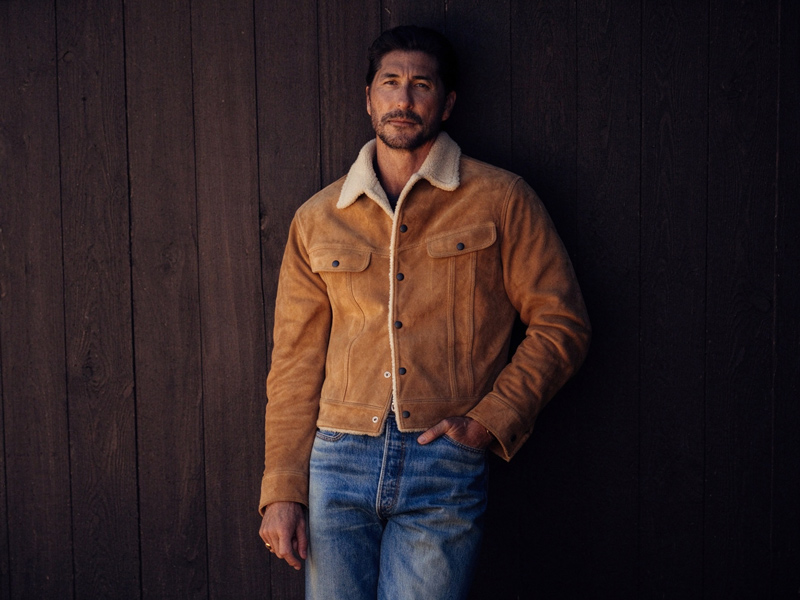
The celebrity file — Ryan Gosling among the brand's most photographed wearers — and the collaborations with heritage names like Eddie Bauer and J. Press complete the positioning: an everyman brand whose everyman is deliberately well dressed.
The honest texture of the everyman halo
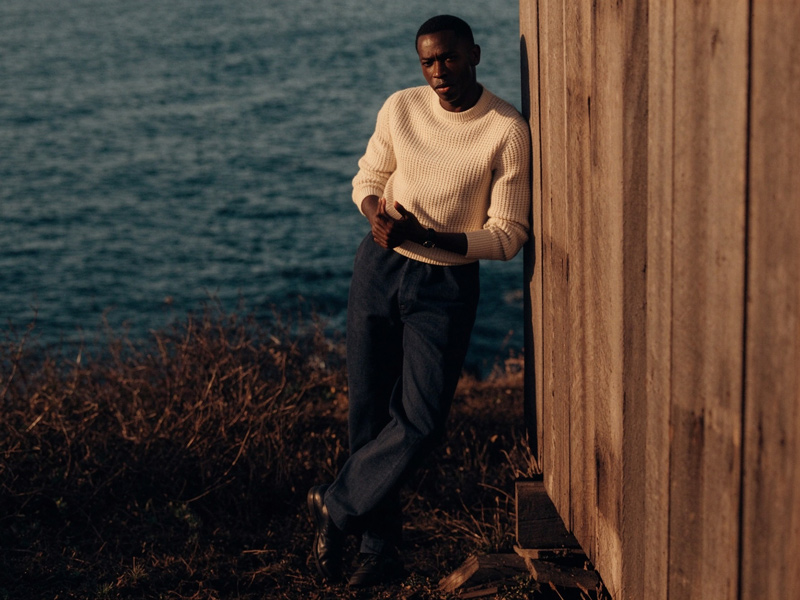
Four honest cautions belong in the ledger. First, price: the classics are priced at accessible-luxury levels — a linen rancher shirt at $178, denim and outerwear climbing higher — a full notch above fast fashion and honest about it, but a real filter on who the everyman is. Second, the forty percent: the made-in-America story is real but partial, and buyers who treat the halo as total will find the import share on the label. Third, the certification gap: third-party listings show GOTS organic cotton and responsible-down certifications, but B Corp status remains pending rather than earned — a thinner third-party file than the certified-organic and supply-chain-audited brands reviewed in this category. Fourth, the aesthetic ceiling: a brand built on future classics deliberately ignores the trend cycle, which is the entire point and also the ceiling — shoppers chasing seasonal novelty will find the catalog changes slowly by design.
None of these are contradictions; all four are the costs of the discipline the brand chose in the garage.
The verdict for the American classics loyalist
Buck Mason's storefront is the anti-fashion thesis that became a hundred-million-dollar business: fifty iterations of a white T-shirt, a Shark Tank offer refused and a growth curve that answered it, a 150-year-old mill bought back to life, sixty percent American with the forty published, a year-long return window, and a store designed like the house of the friend whose clothes you always compliment. The cons are the cons of the discipline: premium pricing, the published import share, the pending-versus-earned certification file, and a deliberately slow catalog.
Buy here if your wardrobe philosophy is fewer, better, forever, if a T-shirt engineered across fifty iterations justifies its price against the three-pack, if the mill story and the year-long returns are your language of trust, and if a brand that turned down a Shark's money to keep its decisions matches your idea of independence. Buy the deep-catalog basics brands reviewed in this category if price tiers and trend velocity outrank permanence. For the American classics loyalist who wants the garage obsession at mall scale, this Venice storefront remains the category's most patient bet — thirteen years, one mill, and fifty-plus rooms that feel like home.