Faherty at thirteen: the jersey twins whose mom designed every store
Official homepage: https://fahertybrand.com
Faherty began as a college essay. In 2000, Mike Faherty wrote a business-school application about a clothing line called Coast to Curb — a brand that would work on city streets and beaches alike. Thirteen years later, after eight years at Ralph Lauren for Mike and a Wall Street career for his identical twin Alex, the brothers launched the company for real from a mobile Beach Shack on Wheels, with their mom designing the stores and Alex's wife running impact. Today Faherty counts more than eighty stores designed by that same mother, a B Corp certification joined to 1% for the Planet membership, a first international store in Biarritz, and a signature fabric obsession that turns recycled bottles into sun-faded softness. This review examines the storefront dimension by dimension.
A college essay, and a briefcase under the bed
The company's own timeline page is unusually intimate, starting the story in 1983 with the twins' birth — inseparable from the crib. The childhood details it preserves are the brand in embryo: six-year-old Mike picking out clothes for Alex and hiding in his father's closet to study the collection of tailored clothing by American designer Allan Flusser; Alex, the frugal one, saving his allowance in a leather briefcase hidden under the bed. In 1996 the family moved from the Jersey Shore to New York, and a teenage Mike discovered Loro Piana cashmere on trips to Bergdorf Goodman with his father — the texture epiphany he has described as wanting his clothes to feel like that. The 2000 college essay naming the Coast to Curb concept is the receipt: the brand's premise was fully formed before either twin had a career.
Alex's parallel path ran through Yale political science into investment banking and private equity — Greenhill, Cerberus — the spreadsheet half of a partnership whose design half was learning stitch lines and yarn counts at Ralph Lauren for eight years, much of it on the heritage Double RL line. The complementary resumes explain the company's signature: designer-grade fabric obsession executed with private-equity discipline.
The perfect board short, and a shack on wheels
The founding product was one object: the perfect board short. The twins' diagnosis of the category was specific — inseams too long, fabrics too synthetic, nothing soft — and their solution equally so: a shorter inseam, added cotton, and a wash technique engineered for softness. Vogue's 2013 launch coverage captured the positioning in one correction that still defines the brand: they are not surf, they are water — lakes, rivers, and oceans, practical swimwear for kayakers to sailors. The fabrics were recycled-plastic bottles — roughly seven per swimsuit — and natural indigo, sourced during what Mike has described as a full year researching every sustainable option and the best manufacturing paths before launch.
The distribution method was the legend: a Beach Shack on Wheels, a mobile pop-up the brothers drove cross-country, selling through local boutiques along the Pacific Coast Highway. The wholesale embrace that followed — Barneys, Bloomingdale's, Nordstrom, Fred Segal, sixty boutiques — seeded the brand nationally; the first permanent store opened in Malibu in 2016. The family texture was present from the start: the stores' interiors were designed by the twins' mother, Ninie Norris, an interior designer who still designs every location.
Buying stores during the pandemic panic
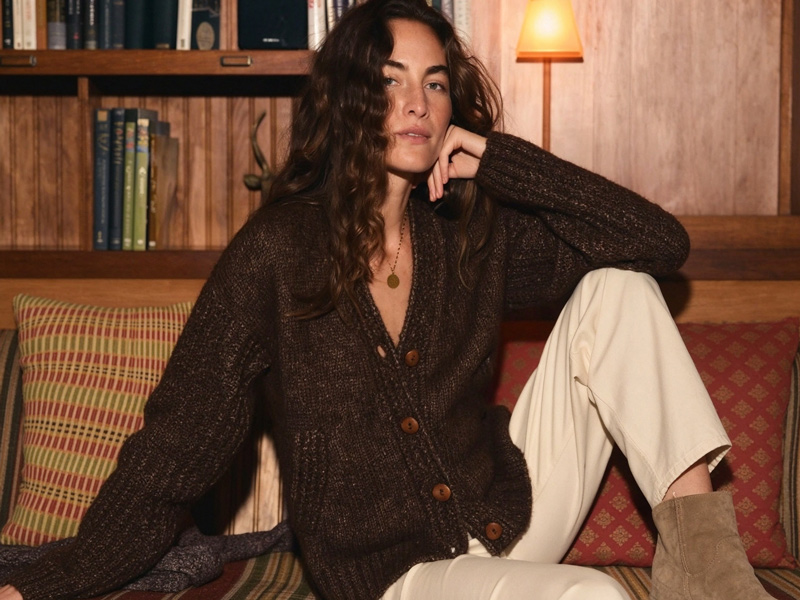
The store-expansion chapter is the business story worth teaching. When COVID crashed commercial real estate in 2020, the brothers did the contrarian thing with their private-equity training: they bought. Thirteen stores became eighty-plus within the decade, each designed by Ninie to feel like a local beach house rather than a chain, the first international location opening in Biarritz in March 2026. Wholesale runs alongside — more than seven hundred doors including Nordstrom, Shopbop, and Bloomingdale's — and the home town got a love letter: Sun & Waves, a hospitality concept on the Jersey Shore near where the twins grew up, extending the brand from clothing into the vacations it was always about.
The expansion arithmetic is supported by a profitable P&L — the company has been candid that it makes money — and by celebrity partnerships like a capsule with Knicks captain Jalen Brunson that translate the coastal ease into city culture. The family-run claim is literal: Alex as CEO, Mike as chief creative, Kerry as chief impact officer, and Mom as the unofficial chief store designer.
Sunwashed, and the fabric obsession
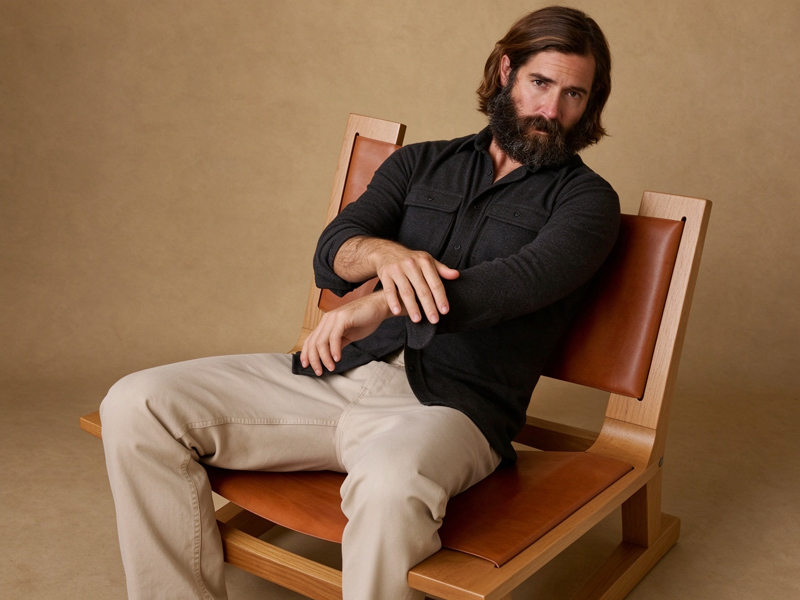
The product engine is fabric development, and the signature technique is Sunwashed — a proprietary process that gives the clothes their faded, already-lived-in hand, developed directly with mills and guarded like a recipe. The material ledger runs the sustainability gamut the category now expects: organic cotton in roughly three-quarters of designs, recycled fibers, ethically sourced cashmere, linen, and the swim program's regenerated ocean plastics. The hero product is the Legend Sweater Shirt — a flannel-adjacent knit that reviewers consistently single out as the item that converts skeptics — and the aesthetic word everywhere is softness: the twins' stated mission is the feeling of comfort from a great vacation, engineered into everyday clothes.
Forbes' early profile captured the trade-offs in the founders' own voices: the products are not cheap and they are not shy about it — the average customer is someone who really respects quality — and Mike spends about two months a year on the road, visiting factories from Taiwan to Tokyo, designing alongside seamstresses. The premium is the price of the hands-on supply chain, and the company has never pretended otherwise.
The 2021 controversy, and the man they hired
The honest chapter is 2021. Faherty's use of Native American-inspired designs — prints and patterns long common in the surf-apparel vernacular — drew the appropriation critique the industry's reckoning demanded. The company's response went beyond apology: it appointed Doug Good Feather, founder of the Lakota Way Healing Center, as Director of Indigenous Education and Engagement, and rebuilt its collaboration model around named Native artists — Good Feather himself, Bethany Yellowtail of the Northern Cheyenne — with partnerships designed to fund artists' work and end appropriation rather than apologize for it annually. The chief impact officer's interviews treat the episode as curriculum: the brand now teaches the difference between inspiration and extraction, and the collections credit artists the way the category should have from the beginning.
The same ledger holds quieter programs — A Second U, which places formerly incarcerated men and women in personal training careers, and the Surfrider Foundation beach cleanups — that turn the coastal lifestyle premise into operational practice.
The B Corp, the one percent, the mother
The certification chapter arrived in fall 2024: Faherty became a Certified B Corporation and a 1% for the Planet member in the same season — a dual designation held by only about two hundred and fifty companies worldwide, and the one the company frames as both milestone and starting gun. Its first Impact Report attached dates to ambitions: one hundred percent responsible materials by 2025, carbon reduction through ocean shipping, a take-back program, and full supply-chain traceability — alongside a collaboration with Circulose on circular materials and membership in Textile Exchange and bluesign. Ninie Norris, meanwhile, continued designing every store, which the family cites as the reason each location feels like a neighborhood house rather than a retail unit.
For the reviewer's ledger, the B Corp-plus-one-percent stack places Faherty in the category's certified tier — the paperwork wall that lets a premium-priced comfort brand charge for its receipts rather than its vibes.
The verdict for the coastal comfort maximalist
Faherty's storefront is the family-business myth executed at chain scale: twin brothers split between Ralph Lauren's ateliers and Wall Street's spreadsheets, a college essay that took thirteen years to launch, a mother designing eighty stores, a sister-in-law running impact, and a fabric obsession that turns recycled bottles into the softness of a remembered vacation. The cons are the cons of the model: premium pricing that the Hanes aisle will never match, a supply chain spanning four continents that audits struggle to keep up with, a 2021 appropriation chapter the brand answered better than most but must keep answering, and a wholesale network seven hundred doors wide that occasionally out-shouts the direct story.
Buy here if your ideal wardrobe feels like a permanent vacation, if the Legend Sweater Shirt's promise of engineered softness justifies its price tag on touch alone, if a B Corp-plus-one-percent ledger and named Native artist collaborations are your language of trust, and if a store designed by the founders' mother sounds like exactly the kind of place you want to buy a sweater. Buy the basics brands reviewed in this category if price-per-wear rules, or the audited supply-chain specialists if paperwork depth outranks hand-feel. For the coastal comfort maximalist who wants the beach-house feeling with a B Corp's conscience, this Jersey-family storefront remains the category's warmest bet — and, after thirteen years, its best dressed.