Excalibur: fifty years of drying fruit without rotating a single tray
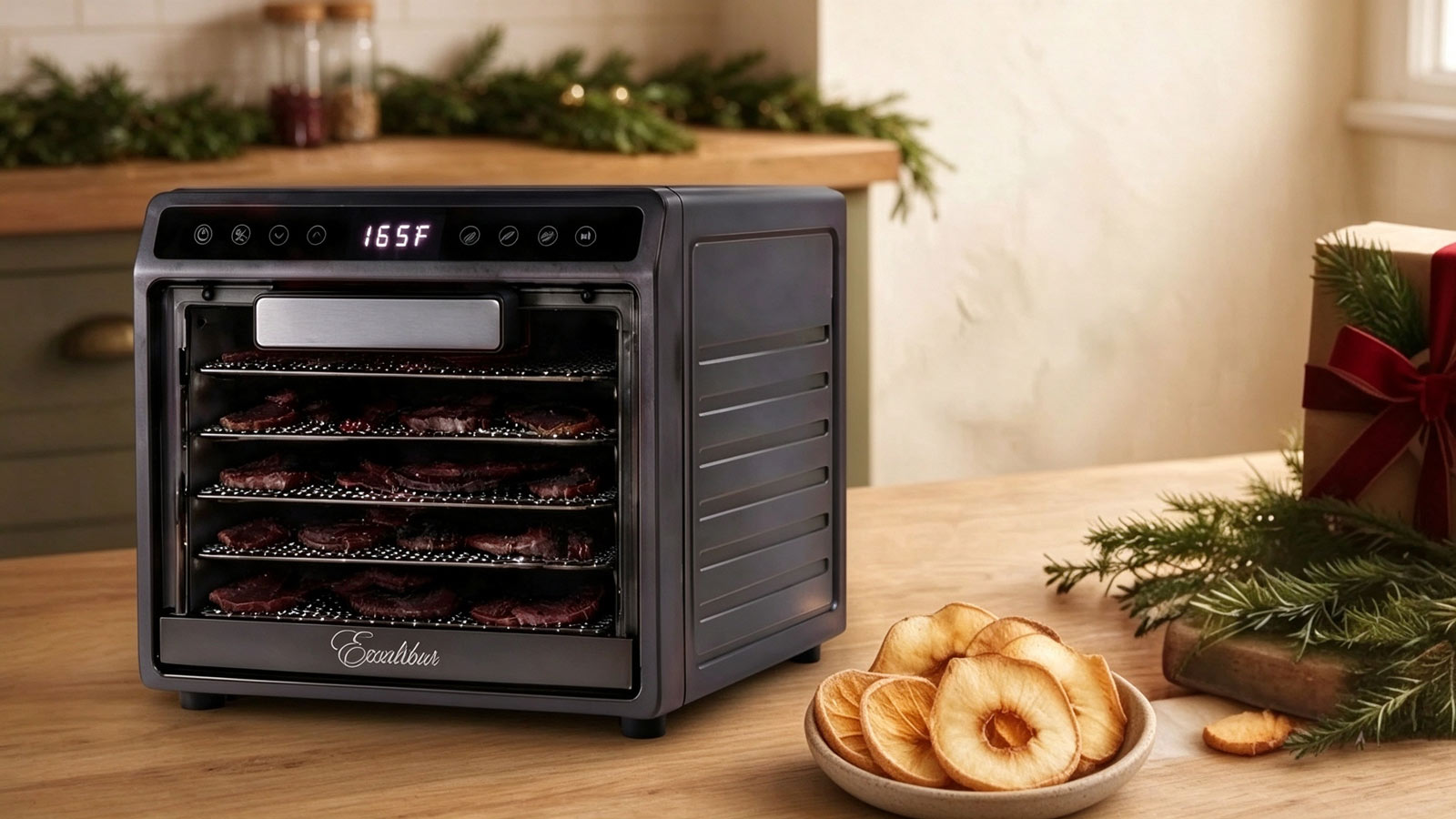
Official homepage: https://www.excaliburdehydrator.com
Excalibur is the original home food dehydrator, and one of the oldest brand stories on this tag. Founded in Sacramento in 1973, family-owned for four decades, and acquired by The Legacy Companies in 2011 — the same owner that now controls Omega Juicers — it has spent fifty years refining one box: a cabinet with a fan in the back that dries every tray evenly without rotation. This review examines the engineering, the cult followings it collected, and what the corporate ownership means for buyers today.The Legacy Companies, 1973, and a Sacramento factory
Excalibur Products was founded in 1973 as a family-owned Sacramento company, according to the Sacramento Business Journal's account of its 2011 acquisition by The Legacy Companies. The product barely changed in principle across those decades: a square cabinet, a fan mounted in the rear wall, trays that slide in like oven racks, and an adjustable thermostat. Units are designed and manufactured in Sacramento, a made-in-USA claim that carries real weight with the homesteading community that built the brand's reputation. The Legacy ownership matters beyond the paperwork: it is the same corporate group whose Omega juicing brand drew a 1.8 Trustpilot score and warranty complaints, so Excalibur buyers inherit that owner's service apparatus — a fact worth holding while reading the warranty section below.
Parallexx airflow and the no-rotation promise
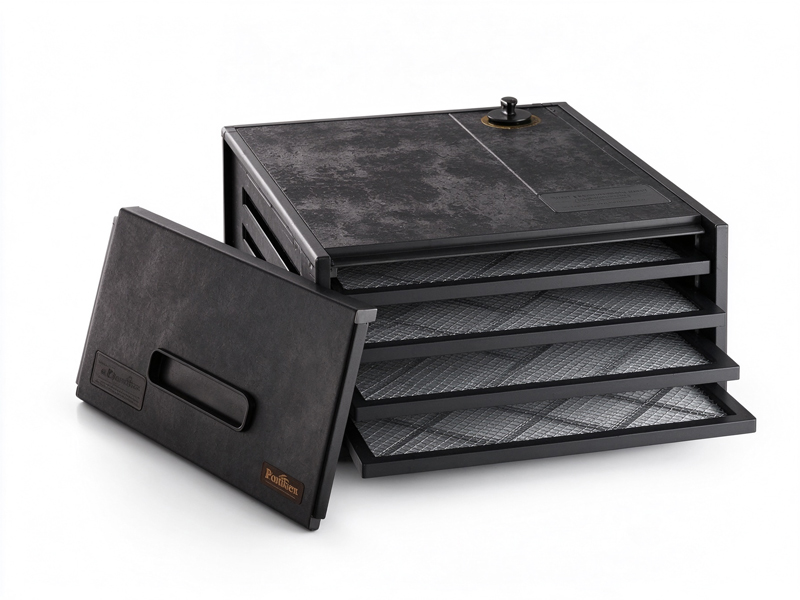
The engineering signature is direction. Most dehydrators blow air upward through a stack of round trays, which dries the bottom layers first and forces owners to rotate trays mid-cycle. Excalibur's patented Parallexx system pulls cool air through the back, heats it, and pushes it horizontally across every tray simultaneously — each shelf receives its own supply of fresh, dry air, so fruit leather on the top tray and apple slices on the bottom finish together, without re-stacking. The square 15-by-15-inch trays add roughly a quarter more drying area than round designs of similar width. It is a fifty-year-old solution to a problem many buyers do not know they have until a cheaper machine teaches them.
Hyperwave fluctuation, enzymes, and raw-food lore
The second technology is temperature behavior. Excalibur's Hyperwave system deliberately fluctuates the air temperature during the cycle: air spikes hot enough to pull moisture from food quickly, then falls, so the food itself never exceeds the temperature that kills enzymes — the property that made Excalibur the default dehydrator of the raw-food movement, where preserving live enzymes is doctrine rather than marketing. The brand leans into the lore with a published guide to dehydration and a recipe library, and owners stretch machines far past produce: proofing sourdough, culturing yogurt, incubating tempeh, tempering chocolate, even drying wet boots in winter.
Jerky safety, fifteen square feet, ten-year stories
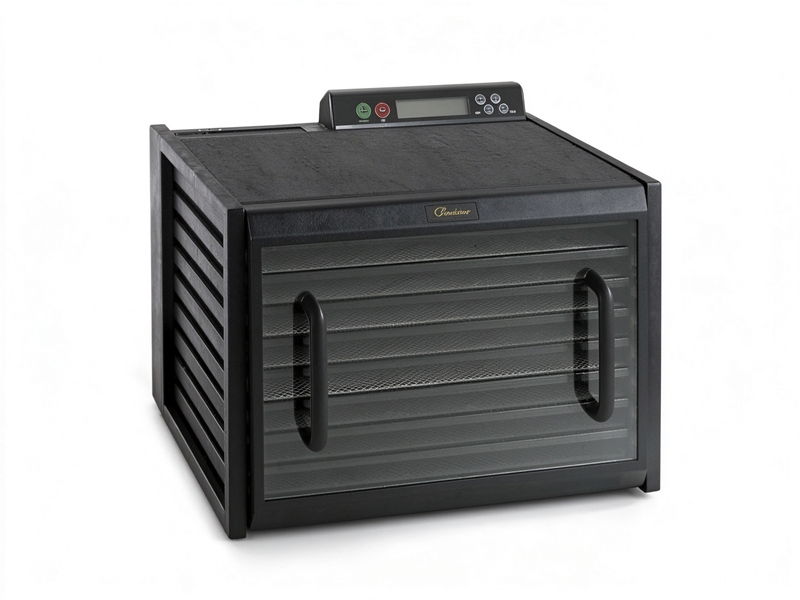
Independent testing keeps arriving at the same verdict. A 2026 six-machine comparison named the classic nine-tray model best for jerky and large batches: fifteen square feet of drying area — the largest tested — with a 600-watt rear fan that holds temperature consistently across all trays, which the reviewer noted matters for meat safety, since the USDA's jerky guidance depends on sustained heat. Longevity is the other headline: the same comparison reports that ninety-five percent of owners describe five-plus years of service, with documented ten-year units common, and older community threads are full of customers still running machines from the previous decade. The classic polycarbonate models carried a ten-year warranty; the current stainless Performance line, per the product pages themselves, carries three years — a downgrade worth noticing before checkout.
Stainless upgrades and the thermostat-drift caveat
The modern lineup splits two ways. The classic 3926 series — polycarbonate body, analog 26-hour timer, nine trays — lists at $239.99 against a $299.99 compare-at, the value pick. The Performance series upgrades to stainless steel construction, digital controls with two-stage time-temperature programs, and 48-to-80-hour timers, running from $249.99 for six trays past $600 for ten. The honest caveat comes from Canadian testing, where the eight-tray Select stainless model earned a strong score but drew a reported-thermostat-drift flag — temperatures wandering from the set point, the one failure mode that quietly ruins a batch of jerky. The classic line's simpler analog controls have no such reports, which is either an argument for simplicity or for the older models' longer track record.
Costco twins, parts pages, and replacement doors
The store's peripheral pages reveal the brand's real economy. Community threads document a Costco-exclusive stainless variant that ships from Excalibur's own California warehouse labeled as the Costco model at a plastic-line price — the insider route owners share openly. The Shopify storefront itself runs periodic twenty-percent-off codes with free shipping, and its accessories section is a parts ecosystem unto itself: non-stick drying sheets, spare trays, clear replacement doors, and individual components, backed by product registration, a warranty lookup, a return policy, and published manuals. A fifty-year-old appliance that still sells its own spare doors is telling you something about design philosophy.
The last apple slice on the Excalibur tray
Excalibur's store sells the appliance equivalent of a cast-iron pan: an old design that keeps winning comparisons because the physics were right the first time. Fifteen square feet of even, no-rotation drying, fifty years of field data, a parts counter that keeps old units alive, and a homesteading community that treats the machine as inheritance. Its costs are equally clear: a footprint and wattage built for gardens and jerky, not occasional banana chips; plastic trays at the base tier; a warranty that shrank to three years on the new stainless line; and a corporate owner whose other kitchen brand's service record advises reading every policy page before the sale, not after. For households that preserve in bulk, it remains the dehydrator every other machine is measured against.