Bombas: the sock brand that turned a facebook post into $2 billion

Official homepage: https://bombas.com
In 2011, David Heath read a Facebook post stating that socks were the most requested clothing item in homeless shelters. Two years of sock engineering, a $145,000 crowdfunding campaign, and one fateful Shark Tank appearance later, the company he built with Randy Goldberg has become the most successful product in the show's history — past $2 billion in lifetime sales, valued at $3.4 billion, certified B Corporation, and responsible for more than 150 million donated items of clothing. In 2025 the founders handed the CEO title to a retail veteran and opened their first store. This review examines the storefront dimension by dimension: the origin post, the product engineering, the donation as a separate product, the infrastructure story, and the honest arithmetic of one-for-one capitalism.
A Facebook post and two years of engineering
The origin is one sentence long, and the founders have repeated it identically for a decade: they learned that socks were the most requested clothing item in homeless shelters. Heath, who studied business at Babson, has called the moment a lightbulb; he and Goldberg, friends since 2007, watched the one-for-one model that Toms had built on shoes and Warby Parker on glasses and asked why nobody had done it for the item shelters actually needed. What followed was not a launch but a two-year research project — working with manufacturers on cushioning, arch support, and the seamless toe that became the brand's signature — funded by an Indiegogo campaign that sought $15,000 and closed above $142,000, ten times the goal.
The two-year engineering period is the detail most mission-brand profiles skip, and it is the one that matters: Bombas concluded early that the donation model could only be funded by a genuinely superior sock, which meant the comfort problem and the charity problem had to be solved in the same product development cycle. The premium price that critics cite is, in the founders' framing, the exact margin that buys the donated pair.
O'Leary's 'profit-killer' and the thirty-second crash
On Shark Tank's sixth season in September 2014, the founders asked $200,000 for five percent. Kevin O'Leary delivered the critique that has followed the company ever since: the one-for-one model was giving away profits in a low-margin category dominated by retail giants. Mark Cuban passed. Daymond John — the show's fashion shark — saw the brand's potential and offered $200,000 for 17.5 percent; the terms were renegotiated after filming in the pattern the show rarely advertises. The episode aired, and within thirty seconds the company's website crashed under the traffic; when the episode re-aired, it crashed again, losing thousands of dollars a minute in broken checkouts.
The aftermath resolved into the most successful product in Shark Tank history: more than $2 billion in lifetime sales and counting, with O'Leary's profit-killer framing preserved in every retrospective as the setup the brand's numbers disprove. The episode remains the cleanest demonstration in retail that a mission, precisely priced, is not a margin problem but a marketing asset.
The comfort engineering underneath the mission
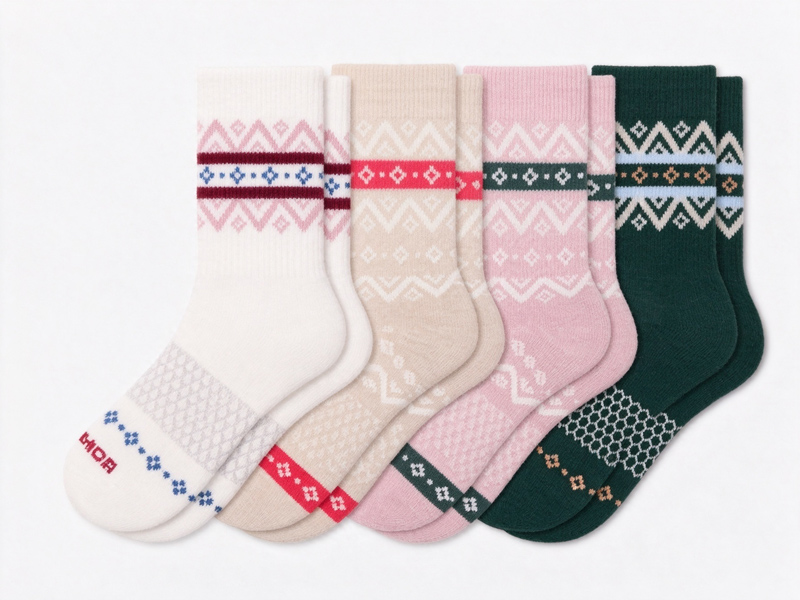
The product case is unusually well documented because socks are unusually testable. Business Insider's guide, maintained across eight years of annual testing, calls Bombas the internet's favorite sock brand and credits the mission accomplished: better than the basic multi-pack, more attainable than technical performance pairs. Men's Health ran four months of wear-testing and returned an endorsement. The engineering vocabulary is consistent across reviews: strategic cushioning zones, honeycomb arch support, the seamless toe that eliminates the one feature everyone hated about socks, moisture management, and a stay-up cuff that does not strangle.
The founder framing of the engineering — the two-year quest for the most comfortable sock in the history of feet — reads as marketing until you notice that every serious review of the category keeps arriving at the same conclusion. Comfort, relentlessly engineered, is what makes the donation math work: the premium is earned before the charity is considered.
The donated sock is a different product entirely
The detail that separates Bombas from the one-for-one imitators is that the donated item is not the retail item. Early giving taught the founders that shelters wanted darker colors that would not show wear; the donation line therefore uses darker shades, an antimicrobial treatment that reduces the washing burden, reinforced seams for longer life, and a looser fit accommodating a wider range of bodies. The feedback loop runs through more than 3,500 giving partners in all fifty states, and the storefront closes the loop visibly: a giving directory lets a buyer enter a zip code and see the partners nearest their home — because the company's data shows most customers live within fifty miles of one, making the mission literally local.
The donation ledger, now past 150 million items across socks, underwear, and T-shirts — the top three most-requested shelter items, in that order — functions as the certification wall of this storefront: third-party audited in effect, if not in acronym, by four thousand organizations that keep accepting the boxes.
Shopify Plus as the quiet infrastructure partner
The company's own platform migration is a published Shopify case study, and it is the rare one where the punchline is arithmetic. After the Shark Tank crashes — losses of $15,000 in minutes, an estimated $150,000 to rebuild for traffic spikes, thousands per month in server maintenance — Bombas rebuilt on Shopify Plus and reported $108,000 in annual platform savings, stability through the re-airings and Black Friday rushes that had broken the previous stack, and $17.2 million in sales in the first year after migration. The quote from Heath — the bigger the buggy we built, the more horses we needed, and the more expensive it got just to keep from crashing — is the most honest infrastructure sentence in the category's marketing literature.
For the storefront reviewer, the case study doubles as a trust signal: a company that publishes its platform costs and its checkout failure history is a company confident enough in its product to show the plumbing.
From $300K to a half-billion-dollar run rate
The growth arithmetic is a straight line on a logarithmic chart: $300,000 in 2013, $4.7 million in 2015, $47 million in 2017, past $100 million in 2018, $225 million in 2021, roughly $325 million in 2024, and a trajectory toward half a billion. The cap table tells its own story: Great Hill Partners took a majority stake in 2018 — the private-equity chapter that scaled the infrastructure — with total funding around $150 million and a 2025 valuation near $3.4 billion. Certification arrived in 2017 when the company became a B Corporation, and the giving milestones compounded with the revenue: forty million items donated by 2020, a hundred million by 2024, a hundred and fifty million by 2025.
The honest operational scars belong in the same paragraph: a year of holiday demand under-forecasting that forced refunds on more than a million late orders, and a Facebook algorithm shift that spiked acquisition costs and taught the marketing team the diversify-or-die lesson every DTC brand of the era learned. Both are founder-confessed, both were fixed.
The 2025 handoff and the store era
In May 2025 the founders executed a succession that reads like the playbook the category rarely follows. Heath stepped from CEO to executive chair, saying on CNBC the sentence most founders cannot say — we have reached a size and scale that is beyond my expertise — and handed the wheel to Jason LaRose, a veteran of Equinox Media, Under Armour, and Express, whose mandate is the company's next chapter: physical retail. The first company-owned store opened on Bleecker Street in 2025 after a dozen years online-only, with more locations planned and wholesale partnerships — including Dick's Sporting Goods — extending the footprint alongside a Universal Pictures collaboration for the Wicked film's merchandising.
The store era answers the category's oldest question about Bombas: whether a brand built on Facebook-era performance marketing and one emotional mission could survive the end of cheap attention. The bet is that comfort engineered well enough, and a mission documented deeply enough, convert in a fitting room the same way they converted in a feed.
The verdict for the comfort-with-receipts wardrobe
Bombas' storefront is the one-for-one model's most complete answer to its skeptics: a Facebook post, two years of sock engineering, a Shark Tank episode that crashed the site twice, a hundred and fifty million donated items with specifications darker and tougher than the retail line, a platform case study published warts and all, and a founder who stepped aside at the right time saying the right sentence. The cons are the cons of the model: a premium price that the comfort justifies but the Hanes aisle undercuts, a mission that cynics will always call margin-dressing no matter how many shelters confirm it, and a post-founder era whose store bet is unproven.
Buy here if your sock drawer is a daily compromise and your charity budget is finite, if a seamless toe and honeycomb arch are worth more to you than a logo, if the zip-code giving directory makes the mission local enough to believe, and if a company whose worst moments — the crash, the refund year, the algorithm shock — are printed on its own case studies matches your idea of accountability. Buy the warehouse-club multipack if price per pair is the only column. For the buyer who wants comfort with receipts, this sock storefront remains the category's most engineered act of generosity — and its most profitable.