A Prime minister's granddaughter, fifty phone calls, and the wardrobe that texts back
Official homepage: https://www.mmlafleur.com
M.M.LaFleur sells thirty seconds. That is the pitch its founder returns to: the half-minute a professional woman gets back every morning because the decision of what to wear has already been made — by a designer who engineered the dress, a stylist who texted back, and a box that arrived weeks before the alarm. Founded in New York in 2013 by Sarah LaFleur — a granddaughter of Japan's prime minister who quit private equity after four months and tutored SAT students at night to fund the company — the brand built the Bento Box, coined Power Casual, dressed women running for office free of charge, and in 2023 survived a lender's abandonment by calling fifty women investors and accepting twenty-five emergency checks. This review examines the storefront dimension by dimension.
Four months at Starwood, then SAT tutoring
The pedigree was establishment; the patience was not. Sarah Miyazawa LaFleur grew up as the granddaughter of Kiichi Miyazawa — Japan's prime minister from 1991 to 1993 — and the daughter of Christopher LaFleur, the United States Ambassador to Malaysia, in households where the dress code was non-negotiable and the rooms were consequential. She studied the machinery of business up close: Harvard, then consulting at Bain and TechnoServe, including a stint weighing agricultural ventures against food security in South Africa, then the private-equity firm Starwood Capital in New York and Paris, valuing luxury houses on its luxury-goods portfolio. She lasted about four months — long enough to know it was not a fit, short enough to be certain she had torched her resume.
What followed was panic, then arithmetic. To bankroll the early days she tutored students for the SAT at night — the tutoring covered her living costs and bought her daylight hours to chase the business idea she had carried since her consulting days, when she kept buying work clothes she did not love at a hundred and fifty dollars apiece. She has kept these details on the table ever since — the four-month exit, the night tutoring, the conviction that she was unemployable — as a deliberate counterweight to the inevitable-genius myth. The name, she has explained, is the approval economy made personal: M.M. was her mother's childhood nickname, Meme.
Seven perfect dresses, and one that wasn't inspired
The founding product test was admirably narrow. In the summer of 2012, the team floated seven perfect dresses for the workplace to a pre-launch audience; people cared, and by December the company was selling its first collection of ten dresses directly to customers, no department store explaining to women what they should want. The frustration behind the test was specific and quotable: I was so sick of paying $150 for a dress that was so uninspired. The market's assumptions offended her twice over — that a woman dressing for a serious job wanted to look like a man in a serious job, or that she would happily spend her weekends decoding fashion media to figure out the difference.
The founding trio completed the architecture: LaFleur supplied the problem and the business literacy; Miyako Nakamura, the former head designer of Zac Posen, supplied the cutting — clothes genuinely beautiful and genuinely engineered; Narie Foster rounded out operations. LaFleur's design philosophy, stated in the company's language ever since, is that the pieces do not look good on a hanger but on a real body — the photograph is not the pitch, the 7 a.m. feeling is. And her ambition is printed as plainly as the doubt: we want to be the biggest workwear brand out there.
The Bento Box makes the stylist text back
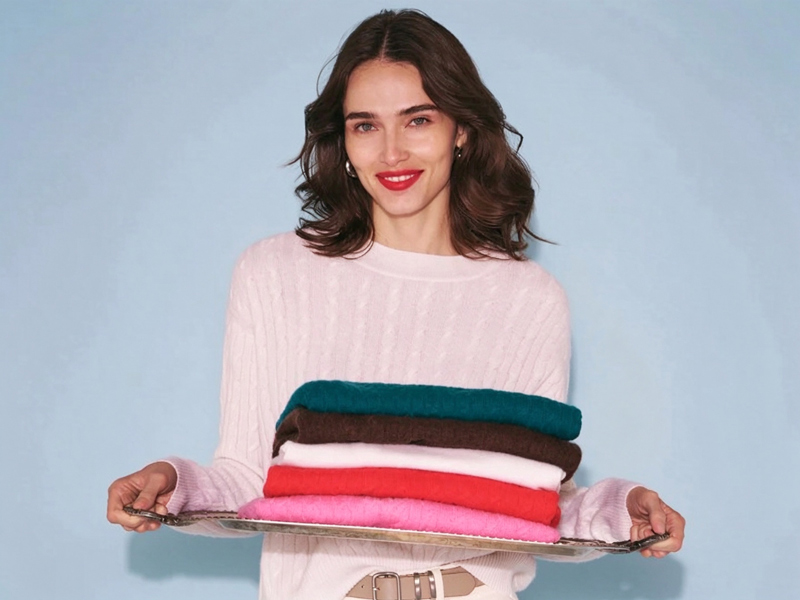
The breakthrough was not a dress but a way of shopping that asked the customer to do almost nothing. The Bento Box — named for the balanced Japanese lunchbox — ships a curated selection of pieces to the customer's door: Essentials, Stars, and Accessories packed to work together. The flow runs a quick online quiz, matches the customer with a real human stylist she can text, and sends the box; the customer keeps what fits her life and returns the rest. The original subscription format, launched in 2014, was retired in 2019 — and the friction-free idea returned as a free styling service, the Bento refined into pure convenience.
The showrooms extend the same logic physically: a handful of boutiques — Boston's Newbury Street, New York, and others — where customers book styling appointments with refreshments, no department-store script required. For the storefront reviewer, the Bento is the brand's deepest asset: it converts e-commerce from a catalog into a service, and it generates the fit data that lets a small brand merchandise like a large one.
Power Casual, and the rewritten dress code
The pandemic should have killed the category: a brand built on dressing for the boardroom lost roughly half its sales when the offices emptied. LaFleur's response became the brand's second act and its most quotable thesis: Power Casual — one level above very casual, one level below business casual, the clothing equivalent of work-life balance. The argument runs that the dress code was never carved in stone, that the hybrid era deleted the instructions without deleting the daily essay question, and that a blurred line between work and home is harder to dress for, not easier. A brand willing to name the new rules, the bet goes, gets to write them.
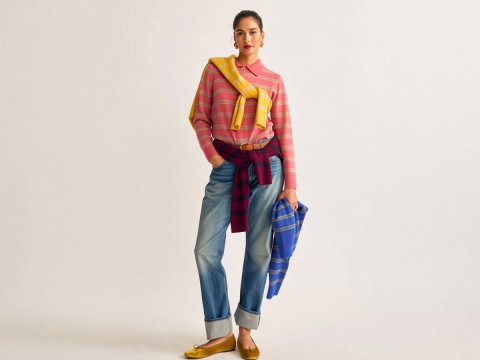
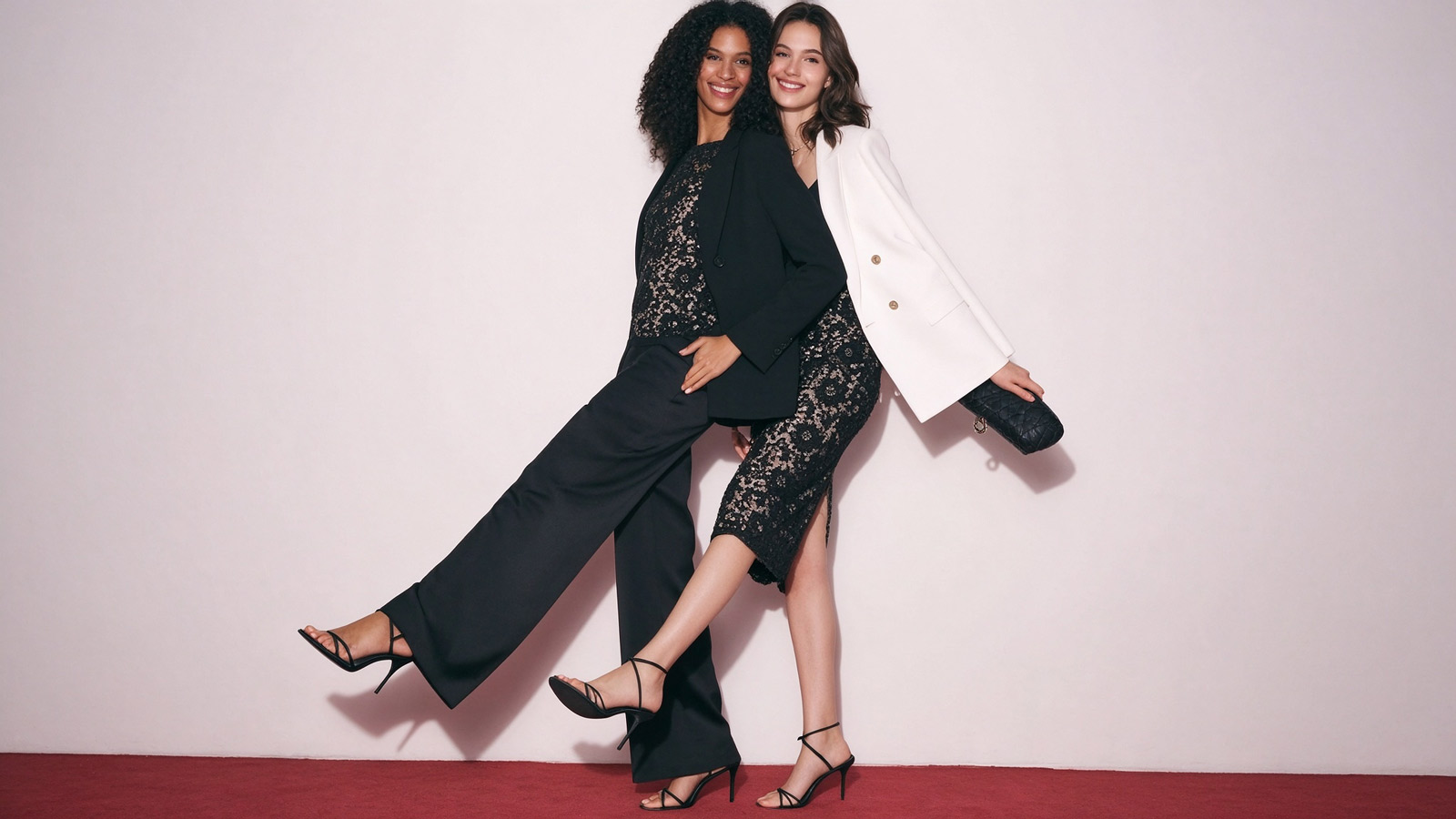
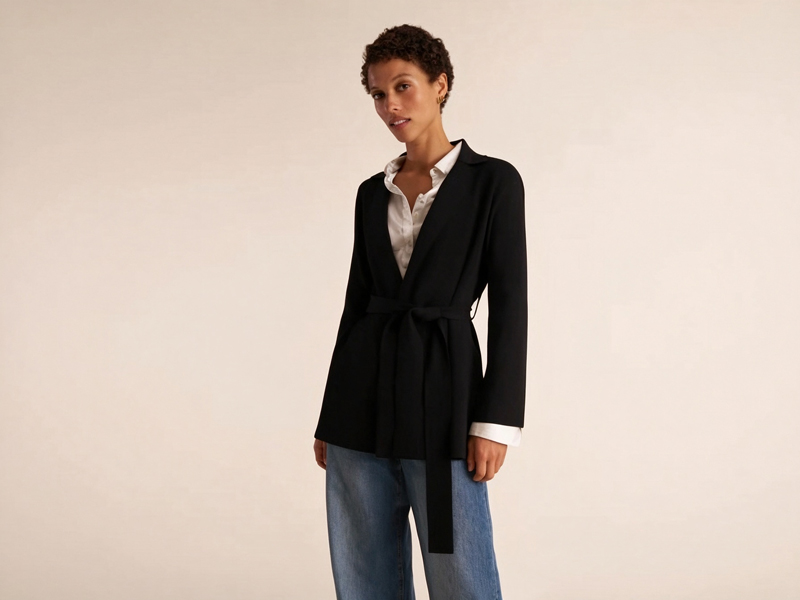
The catalog embodies the thesis: washable dresses that survive a twelve-hour day, the Jardigan — the jacket-cardigan hybrid that became the signature — and slacks with a good tee, priced at accessible-luxury numbers that still mean a blazer in the three hundreds. The clothes are the medium, in the company's own framing; the time saved is the product; the confidence is the point.
Ready to Run, and a league partnership
The mission ledger treats clothing as civic infrastructure. In 2020 the company announced Ready to Run — free clothing loans to women running for political office, on the theory that what a woman wears to the podium is not trivial, since clothing is a powerful way of getting others to see you in that light, and of seeing yourself. A multi-year WNBA partnership followed, carrying the same logic into professional sports. LaFleur's own appointments echo the civic posture: Henry Crown Fellow in the Aspen Global Leadership Network, a seat on the Advisory Council of the Federal Reserve Bank of New York, and a board seat at the Downtown Alliance of New York City — the founder who once feared she was unemployable now advising on the economy of the city she builds in.
For the storefront reviewer, the mission stack functions the way certification walls do for the supply-chain brands reviewed in this category: not proof of garment quality, but proof of institutional seriousness — the kind that survives a skeptical audit of everything else.
Fifty calls, twenty-five checks, one rescue
The 2023 chapter is the story the brand's fans tell strangers. After surviving COVID's destruction of its category, M.M.LaFleur faced a lender that simply pulled out, demanding new capital in a window measured in days. Locked out of conventional venture math — the company was not built for a splashy exit — LaFleur called fifty women investors. Half said yes. Roughly twenty-five wrote emergency checks, and the brand stayed independent on the strength of women funding a woman in a market where female founders receive about two percent of venture dollars. Her line on the episode, preserved in profiles, is the company's most human sentence: it seemed so infuriating that we had built this business for twelve years, and survived COVID, only to be in this position.
The recovery has been real but small by the industry's inflation-adjusted standards: revenue roughly doubled from about $5.9 million in 2023 to about $11.9 million in 2024, with third-party estimates placing the following year in the low twenties. A company that has raised some $85 million total — Series A from Meritech and 645 Ventures in 2016, a $35 million Series B in 2019 — carrying twelve to twenty million in revenue is the ledger's one number that does not flatter the story.
The honest texture of a capital-heavy niche
Four honest cautions belong in the ledger. First, scale: the ambition says biggest workwear brand in the world; the revenue says eighty-person company doing about twelve to twenty million a year — the gap between those numbers is either a long runway or a warning, depending on the reader. Second, capital intensity: some $85 million raised against that revenue base means the service model and the category rebuilds consumed more money than the market returned, and the 2023 rescue exists because of that arithmetic. Third, category concentration: a brand whose premise is the office inherits every office's fate — the 2020 halving of sales is the cautionary exhibit, and the hybrid era, while friendlier, is not a contract. Fourth, fit breadth: extended sizing exists, but the fit system is engineered for a narrower body range than the size-inclusive activewear brands reviewed in this category, and the premium prices — blazers in the three hundreds — define the customer as firmly as the sizing does.
None of these are contradictions of the mission; all four are the costs of building a service-heavy brand in a category the pandemic redrew.
The verdict for the woman with the 7:45 meeting
M.M.LaFleur's storefront is the wardrobe-as-service thesis at its most personal: a prime minister's granddaughter who tutored SATs to fund ten dresses, a Bento Box that texts back, a dress code named and rewritten, a candidate dressed free for her first debate, and a rescue financed by twenty-five women who answered the phone. The cons are the cons of the niche: capital-heavy growth in a category the world keeps rearranging, scale that has not caught the ambition, and prices that select the customer as carefully as the fit system does.
Buy here if your mornings have a meeting before the coffee kicks in and a closet that cannot decide, if a stylist who texts back beats an algorithmic feed, if washable dresses and a Jardigan that chairs the meeting and does the school pickup are exactly the wardrobe your hybrid week requires, and if a brand rescued by its own customers' belief matches your idea of loyalty. Buy the bigger basics brands if breadth and price tiers outrank curation, or the certified-organic specialists if material paperwork is your language of trust. For the woman with the 7:45 meeting who wants the decision already made, this Lower Manhattan storefront remains the category's most personal bet — twelve years, twenty-five checks, and one texted-back wardrobe.