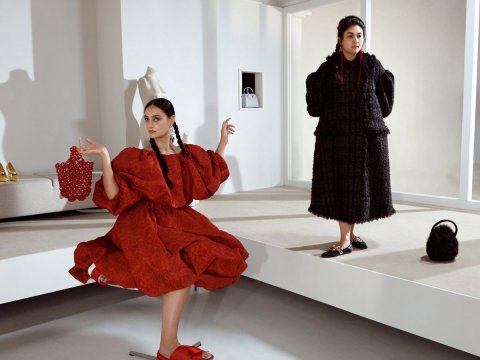
Meet the garage-born boutique whose little tweed dress conquered capitol hill with zero outside capital

Official homepage: https://www.tuckernuck.com
Tuckernuck launched in June 2012 from a workspace above a Georgetown garage, founded by three friends — sisters Jocelyn Gailliot and Maddy Grayson plus their college friend September Votta — who could not find the curated, classic-with-a-twist boutique they wanted to shop online. Named for a tiny island off Nantucket where they spent childhood summers, the Washington, DC retailer has grown into a nine-figure business selling women's, men's, and children's clothing, footwear, accessories, home goods, and now beauty. This review examines how the Shopify-built store actually works: the archetypes behind its curation, the private label quietly driving most of its sales, and the shipping and returns fine print beneath the polished aesthetic.
Three Founders, One Garage, and a Nantucket Name
None of the three founders came from fashion. Gailliot spent a decade in investment banking, while Grayson and Votta had co-founded UScoop, a short-lived social commerce startup for college students. Their frustration was specific: they shopped at single-label retailers like J.Crew and kept arriving at parties dressed identically, yet the more interesting multi-brand boutiques only existed in cities they did not live in. They named the company after Tuckernuck Island, a quiet spot off Nantucket they associated with discovery and nostalgia, went through the 500 Startups incubator, and raised under $500,000 from friends and family. That was effectively the end of the fundraising story — fourteen years later the company has taken no venture capital, passed $100 million in sales in 2021, and still writes every expansion check from operating income. In an industry conditioned to burn cash for growth, that self-funded discipline shapes everything from how slowly it opens stores to how it negotiates with brands.
Millie, Summer, and Charlotte Decide What Gets Stocked
Tuckernuck's merchandising runs on three customer archetypes the founders invented on day one. Millie is the classic heritage dresser — tweeds, tailoring, understated separates. Summer is the bolder, bohemian-leaning print lover. Charlotte, named for the Sex and the City character, is the feminine one — puffed sleeves, ruffled collars, pearls. Buyers evaluate every prospective brand and private-label design against at least two of the three; pieces that speak to all three tend to become bestsellers. The result is a third-party rack spanning Barbour, Ulla Johnson, Farm Rio, Zimmermann, Mother, Simkhai, and Ralph Lauren, plus newer prestige signings like Rosie Assoulin, Altuzarra, and Erdem, alongside pre-owned Chanel, Gucci, and Dior handbags. For the shopper, the catalogue feels like a friend with excellent taste rather than an algorithm — though the taste is unmistakably East Coast prep, and if that register does not suit you, nothing here will change your mind.
A Private Label Quietly Carrying Seventy Percent of Revenue
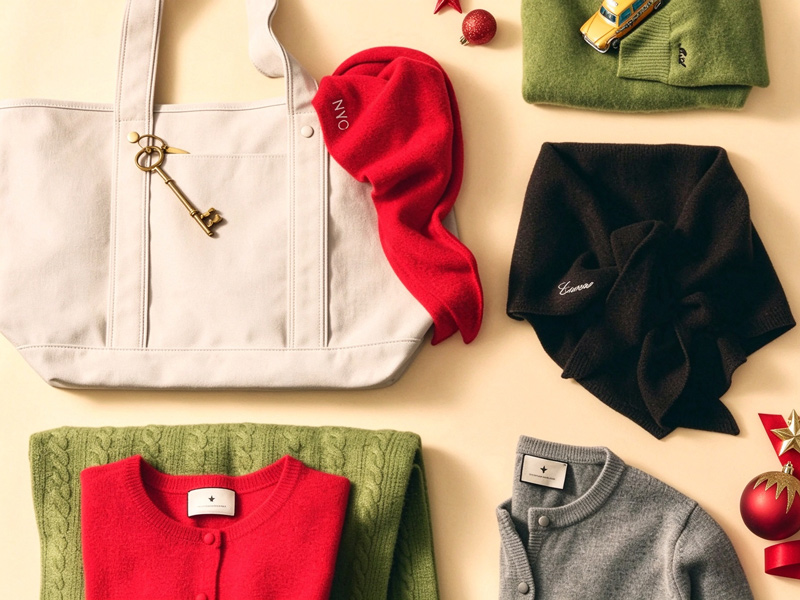
The 2019 launch of the in-house Tuckernuck label changed the company's economics. It began because the founders saw a gap below the $300 price point for modern prep, and it was engineered to complement third-party brands rather than compete with them. Today the private label represents about 40 percent of the assortment but roughly 70 percent of sales, a ratio most retailers would envy. The hits are specific and repeatable: the Jackie, a tweed shift with gold buttons and a braided collar; a $298 eyelet shirt dress; $248 cashmere cardigans that can be monogrammed; a $138 gingham golf dress; and the Margot, a block heel designed to be walked to work in. Sister labels extend the family — Pomander Place, Hyacinth House, Tnuck Sport for tennis and pickleball, and Tuckernuck Home. The monogram program builds loyalty but carries a catch: personalized pieces are final sale. Quality is generally praised, though occasional reviewer grumbles about loose stitching on arrival remind you this is a fast-scaling in-house operation, not a couture house.
From Capitol Hill Staffers to the Convention Floor
Tuckernuck's cultural reach has outrun its store count. Preppy bloggers such as Carly Riordan and Mackenzie Horan were early advocates back when influencer marketing was still a cheap experiment, and the company leaned in, later running collaborations with creators like Blair Eadie and Shea McGee. Then came the Jackie moment: the dress became an unofficial uniform for young female staffers at the 2024 Republican National Convention, prompting Washington Post coverage and one congressional reporter's viral joke about its chokehold on Capitol Hill. The founders insist their customer base spans both sides of the aisle — the archetypes are aesthetic, not political, which is both a brand position and a business strategy. The practical lesson for shoppers is that bestsellers sell out in waves driven by social visibility, so sizing availability on viral pieces can swing within days.
The Store Network Catches Up With the Website
For most of its life Tuckernuck was a website with one small proof of concept: a 700-square-foot Georgetown store opened in 2016. Physical retail accelerated only recently. A second store opened on New York's Upper East Side in September 2025 — around the corner from the Met, styled like a brownstone, with queues down Madison Avenue on opening day — and the original Georgetown flagship is relocating to a larger Wisconsin Avenue storefront slated for early 2026. Dallas, Atlanta, Chicago, Boston, and Connecticut are named as future targets. The stores matter beyond ambience: they let customers feel the private-label fabrics and ease the fit anxiety that online reviewers occasionally mention. The DC headquarters, meanwhile, has expanded to roughly double its previous footprint — a quiet signal that the self-funded company expects the next decade to be bigger than the last.
Free Shipping In, Twenty-One Days to Change Your Mind
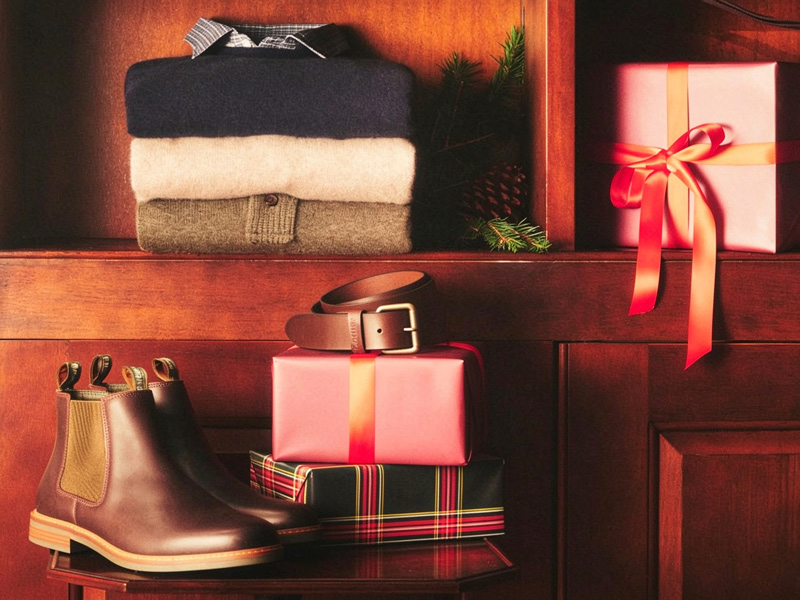
The commercial terms are straightforward on the way in and stricter on the way out. Standard shipping is free on all US orders and arrives in five to eight business days; expedited costs $20 for two to three days and next-day $45, with a 2 p.m. Eastern cutoff. International shipping is available through the site's help center, though international returns carry fees. On returns, the window was trimmed in September 2024: you now have 21 days from delivery to initiate a free US return, down from 30, via a portal offering UPS drop-off or Happy Returns locations. Exchanges have been discontinued entirely — the official advice is to reorder the right size and return the original — final-sale items are excluded, and monogrammed pieces are always final. Refunds land within about two weeks of the return arriving. Behind the scenes a reverse-logistics program resells 78 percent of returned units within 30 days, and a strict anti-abuse clause restricts accounts that return at least ten items and 75 percent of purchases in a year. Service is reachable by phone, chat, or text, though one 2026 reviewer noted sizing help came only by text. Loyalty perks, a flat $8 gift wrap, and a 15 percent ID.me discount for military, medical, student, and teacher communities round out the package.
Who the Tuckernuck Formula Serves Best Today
Tuckernuck is a department store in the American lifestyle register — the place where the women who run Washington buy a dress that works at the office and at a garden party, and increasingly where their families and homes get outfitted too. Its strengths are structural: fourteen years without outside capital, a private label that converts curation into margin, a free-shipping experience backed by real stores, and a brand warmth that national retailers spend millions failing to fake. Its weaknesses are equally structural: the prep aesthetic is a ceiling as much as an identity, the return window shrank when much of the industry moved the other way, exchanges no longer exist, and bestsellers can vanish mid-season. We recommend Tuckernuck wholeheartedly to its archetypal customer — and suggest everyone else check the 21-day clock and the monogram fine print before falling in love with a dress.