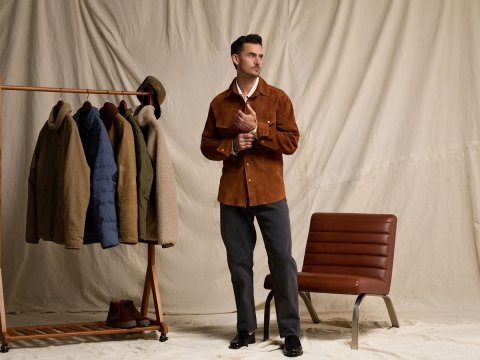
Fifteen years in, kith turned one sneaker obsessive's taste into a global lifestyle department store

Official homepage: https://kith.com
Kith opened in November 2011 as a small New York sneaker boutique founded by Ronnie Fieg — a man who had spent half his life working the stockroom and buying floor of his family's footwear store. Fifteen years on, it has become something harder to categorize: a multi-category retailer stocking its own menswear, womenswear, and kids' lines alongside Nike, New Balance, and ASICS, wrapped in a hospitality universe of cereal bars, restaurants, and a private members' club. This review tests how the Shopify-powered store actually performs for a shopper — from drops and pricing to the fine print of its returns policy.
A Stockroom Apprenticeship That Quietly Trained a Tastemaker
The Kith story begins earlier than most brand origin myths. Ronnie Fieg went to work at thirteen as a stock assistant at David Z, the New York footwear store run by his second cousin, and by twenty-five he was its head buyer. Those years on the floor — watching what customers actually buy versus what they say they want — became the foundation for everything that followed. In 2007, ASICS tapped him to rework a Gel-Lyte III from its archive; the project's success, including a pair that landed on the cover of the Wall Street Journal, made him one of the first designers to build a career on boutique collaboration. When Kith opened its first Manhattan and Brooklyn stores in November 2011, the debut release was the ASICS Gel-Lyte III "Salmon Toe" — a shoe scarce enough to become a collector grail, reissued for the brand's fifteenth anniversary in 2026. The name, drawn from "kith and kin," signals friends and family, and the company still runs like one, with Fieg as founder and creative director rather than a venture-backed CEO.
From Sneakers to Cereal, the Widening Product Map
What earns Kith a place in any department store conversation is breadth. The site sells Fieg's own Kith label across menswear, womenswear, and kids, backed by a curated multi-brand rack spanning Nike, New Balance, Adidas, ASICS, Clarks, and Timberland, with accessories, home goods, skincare, and collectibles filling out the edges. The in-house apparel line arrived in 2012 after customers kept asking what to wear with the shoes; a dedicated women's business followed in 2015. Pricing sits at premium streetwear level — tees around $75, hoodies around $175, beanies near $60, with collaborative sneakers typically running higher. The catalogue's most unexpected entry is Kith Treats, a cereal-and-ice-cream bar concept launched inside the renovated Brooklyn store in 2015, which has grown to roughly eighteen locations worldwide and turned breakfast into merchandise.

Collaborations Run Like a Weekly Publishing Schedule
Collaboration is the engine of the business, treated less like an occasional marketing stunt and more like an editorial calendar. The Monday Program drops new capsules on a fixed weekly rhythm, and Fieg's partner list crosses industries: more than ninety New Balance projects since a two-shoe "Grand Opening" pack in 2011, a long ASICS run that reached its fiftieth design in 2016, and one-offs with Coca-Cola, BMW, Versace, Moncler, Giorgio Armani, TAG Heuer, and the New York Knicks. In June 2026 the New Balance partnership produced something genuinely new — the "2011," the first original silhouette Fieg has designed for the brand, developed over two years and named for Kith's founding year. For shoppers, the payoff is a steady stream of product that exists nowhere else; the cost is that hot releases sell out in minutes and reappear on resale platforms at two or three times retail.
A Retail World Built Around the Shop Itself
Kith treats physical retail as proof of seriousness. After New York came Miami in 2016 — the first store outside its home city — followed by Los Angeles, Paris in February 2021 as the first European standalone, Tokyo, Seoul, and a two-floor Regent Street flagship in London that opened in November 2025. Many locations fold in hospitality: Sadelle's at Kith, the Major Food Group restaurant serving brunch inside stores; standalone Kith Treats counters; and in Manhattan's West Village, Kith Ivy, a private members' club with wellness and padel facilities — reportedly a five-figure initiation fee — that converts the most loyal customers into cardholders. Store-within-a-store presences at Bergdorf Goodman and Selfridges extend the reach further. None of this matters much if you shop purely online, but it explains the confidence of a brand that is clearly more than a URL.
Scarcity Pricing and What the Markup Really Costs You
On value, Kith asks for a suspension of disbelief. Core basics are well made but priced like collectibles, and the most desirable items are deliberately under-supplied — the queue system on drop days, and the store's stated right to cancel orders it suspects came from bots, tell you the demand-to-supply ratio before you even log in. Miss retail and the secondary market imposes its own tax, which Kith indirectly benefits from as free marketing. There are counterweights: a sale section with genuine discounts, seasonal markdowns, and a Kith app loyalty program with tiered perks. The honest calculation is that you are paying for curation, story, and early access as much as for cotton and rubber. Shoppers chasing value-per-dollar will do better elsewhere; shoppers who treat getting the item as part of the product tend to feel the price is justified.

Thirty-Day Returns That Refund You in Store Credit
The policy fine print is where Kith feels least generous. Eligible online purchases carry a thirty-day return window, but refunds arrive as a Kith e-gift card rather than money back, minus an $8 restocking fee, with original shipping never reimbursed and no exchanges offered at all — the store's own advice is to return and rebuy. The final-sale list is long: all Kith footwear, Monday Program items, collaborative footwear, hats, underwear, socks, swimwear, skincare, jewelry, and anything already discounted. In-store purchases get an even tighter fourteen days, as store credit only. International orders ship via DHL Express through a Global-E checkout that lets you prepay duties so the parcel arrives fully landed — though those duties are non-refundable on a return, and several key footwear brands cannot be shipped internationally at all under vendor agreements. Customer service runs through a help center portal, and the store is explicit that packages marked delivered become the buyer's responsibility.
Who Actually Gets the Most Out of Kith
Kith is a department store only in the modern, lifestyle sense — a shop where footwear, apparel, food, and membership blur into a single brand. Its strengths are real: a founder whose taste has been validated by fifteen years of sell-throughs, a collaboration engine with few peers, global retail that backs up the website, and a shopping experience that treats product as culture. Its weaknesses are equally structural: scarcity that punishes slow shoppers, prices that assume you value the story, and a returns policy that keeps your money inside the ecosystem. We recommend Kith without hesitation to streetwear enthusiasts and gift buyers hunting genuinely distinctive items — with one caution for casual shoppers: check sizing carefully before ordering, because store credit is the only way back.