Is the box of awesome still awesome after the subscription box bust?
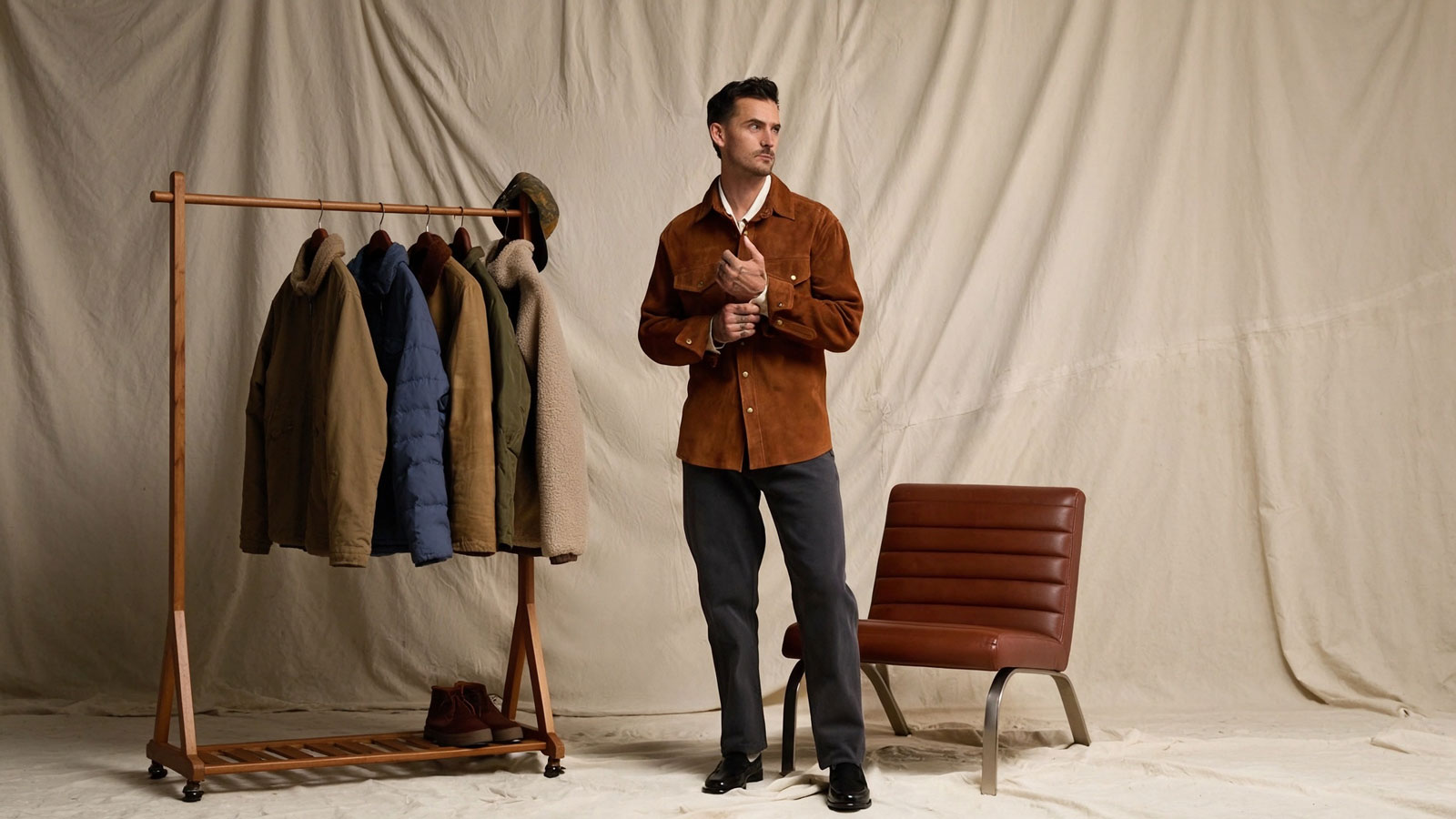
Official homepage: https://www.bespokepost.com
In 2011, two business-school classmates joined the very first class of a New York accelerator with an idea about QR codes and advertising — an idea, they quickly realized, that neither of them was the right founder to build. Rishi Prabhu and Steve Szaronos pivoted into the year's hottest model, the subscription box, built a storefront in thirty days, and shipped their first Box of Awesome to men who had never had a subscription service built for them. They rode the subscription mania to a forty-million-dollar Series B — and then, when the mania curdled into a bust, they did the rarest thing in the category: they de-subscribed themselves, converting the box business into a hybrid membership store where anyone can shop and members simply receive a monthly offer they can refuse. Fourteen years in, the company has spent a hundred and fifty million dollars with small brands, reports nine-figure revenue, and claims it has not needed outside capital since 2021. This review examines the storefront dimension by dimension: the pivot, the box, the small-brand ledger, the de-subscription, and the honest arithmetic of a men's department store that arrives monthly.
QR codes, a pivot, and thirty days
The founding begins with the wrong idea, executed honestly. Prabhu and Szaronos met at Kellogg, skipped the consulting recruiting cycle, and applied to the Entrepreneurs Roundtable Accelerator — ERA's very first class — with a concept around QR codes and advertising, as Szaronos later told the Forbes-hosted podcast. Inside the program, they concluded the concept did not play to their strengths as founders, and pivoted to the model the market was then rewarding: a subscription box for men, under the theory that no serious subscription service had ever been built for the male half of the population. The site went live roughly thirty days after the idea crystallized, and the first Box of Awesome shipped in the summer of 2011.
The founding numbers that followed are the seed-stage numbers every era produces: an $850,000 seed in 2013 from Great Oaks, 500 Startups, and BHV, then a $6 million Series A led by Walden Venture Capital in 2017, with Scout Ventures and Kiwi Venture Partners participating. By 2018 the company counted forty employees and disclosed the demographic profile that still defines it: roughly seventy-six percent of customers between twenty-one and forty, a median age of thirty-two, ninety percent male, three-quarters married or partnered, and sixty percent earning over $85,000 — the young professional man, as the company told Yahoo Finance, with disposable income and no discovery destination built for his interests.
The Box of Awesome era, and its discontents
The box era's mechanics were the category standard with one refinement. Members filled out a quiz about their interests; the curation engine matched them to one of several themed boxes each month — grooming, barware, outdoor, kitchen, apparel, everyday carry; guidance content taught them to use what arrived, the straight-razor lesson and the Chelsea-boot styling that the company described as core to its value proposition. The box retailed at $55, or $45 for members, with shipping under four dollars; members could skip a month's box within the first five days of the month, and the Women's Health holiday collaboration showed the model's gift economics — men buying curated boxes for the women in their lives during the season.
The discontents were the category's structural ones. Subscription fatigue hollowed out the model the mania built; customers who loved discovering a brand inside a box wanted to buy more of that brand on their own terms, and the one-box-a-month cadence became a ceiling rather than a relationship. The company watched the category leaders die of the disease and chose surgery before the symptoms: the repositioning began years before the 2021 funding round made it official.

Ninety percent of the shelf is small brands
The brand philosophy is quantitative, which is why it survives scrutiny. Per co-chief executive Prabhu's own formulation at the Series B announcement: we're extremely proud of the fact that 90 percent of the brands we carry are small — they're fundamental to our ability to fulfill the promise we make to our members about discovering new gear and experiences. The ledger behind the claim compounds: fifty million dollars spent with small brands in a single year by 2021, a hundred and fifty million cumulatively by later accounts, and a sourcing operation that treats the discovery of an under-the-radar maker as the product's core event.
Around the small-brand core grew the private-label exception and the adjacent experiments. Line of Trade, the company's own menswear private brand, launched as the modern-essentials complement — and by 2024 was sufficiently independent to go it alone, per WWD's coverage, a quiet signal that the private-label arm had graduated past the box. The wine club, launched in 2018 with millennial-male education as its pitch — varietals, decanting, pairings, tasting notes with each shipment — extended the guidance doctrine into a consumable category. The tension between championing small brands and competing with them via Line of Trade belongs in the ledger and will return in the honest texture below.
The great de-subscription, and the hybrid store
The repositioning is the company's most instructive chapter. When the subscription-box model lost its luster, Prabhu's phrase for what followed — delivered to WWD in 2024 — is a repositioning: the company became an e-commerce brand that offers memberships. The hybrid mechanics: anyone can log on and purchase anything in the shop at any time; members, whose membership is free, are additionally offered a curated assortment selected for them each month; if interested, the box ships; if not, they opt out. The data rationale the founders gave Modern Retail is the discovery loop stated plainly: when customers discovered products via the box, they wanted a deeper connection with them — more than one or two items — and there was simultaneous demand from non-members wanting to buy the broader range. The shop, in other words, existed because the box created demand the box could not satisfy.
The numbers attached to the pivot justify it. The company reported revenue growth of eighty-five percent in 2020; more than three hundred thousand active members by the 2021 funding announcement; nine-figure revenue, 1.5 million customers, and an active email list above two million by 2023; and — the figure that distinguishes survivors from casualties — average annual growth of forty percent since 2019, with e-commerce revenue up sixty-six percent year over year through the third quarter of 2024. The box did not die; it became the top of a funnel that ends in a shop.
Forty million dollars, then self-sufficiency
The capital chapter arrived in October 2021: a $40 million Series B led by NewSpring Growth, with Savano Capital Partners and Second Alpha participating alongside the existing Walden, Great Oaks, and 500 Global investors. The company's own framing of the round is the texture worth quoting: it focused on profitable growth over the years and raised only $8 million prior to this round — the anti-blamazon discipline of a business that had been building toward self-sufficiency from the seed. Since the infusion, the company states, the business has been self-sustaining and no further outside investment has been needed.
For the storefront reviewer, the self-sufficiency claim is the review's center of gravity. A subscription-box company that survived the bust, converted to a hybrid shop, raised one big round, and then declared capital independence is the category's counterfactual — the proof that the model was always a merchandising business wearing a subscription costume, and that the costume came off before it could strangle the merchant underneath.
The men's department store thesis
What the hybrid actually is, merchandised fully, is a department store. The company describes itself as a multi-category e-commerce retailer and subscription service whose assortment spans apparel and kitchenware to watches and barware — the department list of a traditional men's store, minus the department store's square footage and plus a monthly curation engine that learns each member through the quiz. The quiz-driven personalization is the operational heart: every box skipped is data, every box chosen is data, and the curation compounds quarterly in ways a static shelf cannot match.
The thesis's limits are equally plain. The store is for men — ninety percent of whose customers, at last public count, are male, with a median age in the early thirties — and the men's-lifestyle shelf is contested by Huckberry above and Amazon's algorithmic everything below; the differentiation runs on curation taste and the small-brand supply chain rather than on anything a competitor cannot imitate. What a competitor cannot easily copy is fourteen years of preference data and the supplier relationships the hundred-and-fifty-million-dollar small-brand ledger built — the two assets that make the thesis defensible rather than merely descriptive.
The honest texture of the Box
Four honest cautions belong in the ledger. First, the niche ceiling: a men's store whose core customer is a thirty-two-year-old professional caps its addressable market by definition, and the Women's Health-style gift experiments suggest the company knows it — the box is more giftable than the brand is expandable. Second, the skip-friction: the five-day opt-out window is the model's cancellation moat, and the internet's how-to-cancel guides for Bespoke Post are numerous enough to constitute their own genre — a member who forgets the window pays for a box they did not choose, which is the subscription model's original sin wearing a friendlier name. Third, the private-label tension: Line of Trade competes with the very small brands the box champions, and as the private label grows more independent, the ninety-percent-small claim requires increasingly careful bookkeeping. Fourth, the opacity: no financial disclosure since the 2024 growth percentages — a self-sustaining private company owes no one numbers, but the reviewer must note their absence.
None of these are contradictions; all four are the taxes on a subscription business that de-subscribed before the bust could bill it.
The verdict for the monthly box member
Bespoke Post's storefront is the pivot thesis run for fourteen years: two Kellogg classmates who joined an accelerator with a QR-code idea, pivoted in thirty days to a men's box, survived the subscription mania and the bust that killed it, repositioned as a shop that offers memberships, kept ninety percent of the shelf small and spent a hundred and fifty million dollars proving the preference, took one forty-million-dollar round and then swore off outside capital, grew forty percent a year through the conversion, and built the closest thing the internet has to a men's department store that arrives monthly with a straight-razor lesson inside. The cons are the cons of the model's inheritance: the men's ceiling, the skip-window sin, the private-label tension, and the numbers silence.
Buy here if you are the thirty-two-year-old professional the quiz was built for — or shopping for him — if discovery delivered monthly beats browsing endless shelves, if ninety percent small brands is a purchasing philosophy rather than a marketing line, and if a membership that never charges a fee and always lets you walk away matches your idea of what a box should be. Buy Huckberry if the editorial bar must be higher, or Amazon if the price must be lower. For the monthly member who wants the department store to learn his tastes and send the good aisle to his door, this New York storefront remains the category's most self-sufficient answer — one pivot, one box, one shop, and the Awesome still shipping.